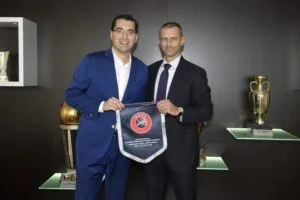
The Context of Čeferin's Presidency
Aleksander Čeferin has been at the helm of UEFA since 2016, a time when European football was facing various challenges including financial disparities between clubs, conflicts over broadcasting rights, and tensions regarding the Super League proposal. His leadership style, characterized by a diplomatic approach and an emphasis on unity among member associations, has played a significant role in navigating these turbulent waters. Under his watch, UEFA has implemented several reforms aimed at enhancing the transparency and fairness of European competitions.
Reflecting on his tenure, Čeferin took decisive steps to improve women's football by increasing investment and visibility. This move aligns with the broader trend in sports where organizations are recognizing the need for gender parity and the potential for women's competitions to stand on equal footing with men's. The support from the Romanian Football Federation’s Executive Committee indicates a broader sentiment among national federations that his leadership has been effective in steering UEFA through complex challenges.
Support from Romanian Football Leaders
Recent developments have shown a clear consensus emerging from the Romanian Football Federation’s Executive Committee. They've voiced unanimous support for Čeferin's potential re-election, which is interesting given that he previously stated he wouldn't pursue an extended term. This kind of backing illustrates a common phenomenon in sports administration: When a leader demonstrates effective governance, stakeholders prefer continuity rather than risking change, especially when there's no clear alternative championing a different vision.
The support from Romania isn’t an isolated instance; other federations have also been vocal about their desire to see him run again. However, the absence of alternative candidates presents both a challenge and an opportunity for the UEFA community. Depending on how the elections unfold, Čeferin may face pressure to clarify his intentions sooner rather than later.
Implications of His Potential Reelection
If Čeferin ultimately chooses to stand for re-election, it will be a pivotal moment for UEFA. Many elements of European football are interlinked with the policies that he advocates. His ability to navigate financial regulations regarding club management, for instance, will significantly impact leagues across Europe. This is particularly salient as clubs continue to grapple with the fiscal aftermath of the COVID-19 pandemic.
And here's the thing: without a strong focus on sustainable practices, the financial viability of many clubs might be jeopardized. More stringent financial fair play regulations, which Čeferin supports, could be a contentious topic among club owners who are eager to expand their commercial reach. If he's reelected and maintains his current policy stance, we could see a tighter control around club finances, which some might argue could limit ambitious investment in player acquisitions.
The Silence on His Candidacy
Despite the chorus of support surrounding him, Čeferin has remained mum about his future plans. This silence can be interpreted in various ways. On the one hand, it might indicate that he’s weighing his options carefully, considering the pros and cons of a second term in a complex political environment. On the other hand, it could suggest a tactical approach, allowing member associations to rally support without a definite commitment from him yet. However, this draws attention to a central dilemma faced by leaders in sporting organizations: how to balance personal ambition with the pressing expectations of stakeholders.
Moreover, the vacuum created by his indecision may incite rival ambitions among members who might see a chance to challenge his leadership. If you're working in this space, you'll recognize how quickly the political dynamics can shift as informal power brokers emerge. The presence of an unexpected challenger could introduce a competition that forces Čeferin to act more decisively.
Comparing with Past Elections
This situation has echoes in past leadership challenges within major sports organizations. Consider the FIFA elections where candidates often emerge based on factions vying for influence. When Sepp Blatter was president, he faced a series of crises that ultimately led to calls for new leadership. The lack of opposition can be an indicator of a successful tenure, but it can also represent an organization that has yet to foster new leadership or ideas. This aspect is vital for the health of any governing body—fresh perspectives are often just as important as stable leadership.
This raises an essential question: what will UEFA look like if Čeferin decides not to seek reelection or faces unexpected challenges? The stakes are high, and the repercussions could reshape the narrative of European football governance for years to come.
Future Outlook
The next few months promise to be critical as we watch how the scenario unfolds. The European football community will be paying close attention, not just for potential shifts in leadership but also for the implications of policy changes that could impact the sport's financial architecture. For fans and club members alike, certainty about leadership and direction translates into stability, which they crave after years of uncertainty around club finances and governance.
More than just a personal decision, Čeferin's situation reflects broader trends in sports governance. If he carries on, the focus might remain on financial and governance reforms. If he steps aside or fails to secure reelection, it could create ripples that lead to intense discussions about the future direction of UEFA.
As Čeferin mulls over his next steps, one thing's clear: the future of UEFA will be significantly influenced by his decision, and that, for better or worse, could have lasting implications for the sport.
The post Romanian FA declares for Čeferin, but Čeferin has still to declare for UEFA appeared first on Inside World Football.