Bruno Fernandes’ place at Manchester United is under sharper scrutiny after a heavy defeat to Como exposed a growing dispute over his role, his effort off the ball and the team’s direction. The criticism is landing at a difficult moment: his production has dipped, his contract is approaching its final year, and reports say Galatasaray have withdrawn from the list of interested clubs.
Strong career numbers, uneven current form
Fernandes has delivered 111 goals and 106 assists in 338 appearances for United since joining in 2020. That record helps explain why many supporters see him as the team’s talisman. But his influence this season has been less consistent: he has five goal contributions in 11 appearances, with four of those goals coming in just two matches.
He has registered a goal or assist in only two of those 11 games, against Ipswich Town in the Premier League and Sabah in the Champions League. United were heavy favourites in both. Fernandes has since gone six league games and two Champions League matches without a contribution.
SciSports’ player ratings currently place him fourth among United players, behind Bryan Mbeumo, Matheus Cunha and Marcus Rashford. The ranking is one measure rather than a verdict on his overall value, but it reflects how his recent output compares with teammates.
The deeper question is whether Fernandes’ style helps or hinders the side when United don’t have the ball. Critics have long argued that he chases play and gestures at teammates in ways that disrupt the team’s shape. Supporters counter that his creativity and willingness to take responsibility make him one of the few players capable of changing a game.
Keane’s criticism has a long history
Roy Keane has questioned Fernandes’ leadership and work rate for years. After United drew 2-2 with Everton in February 2025, Keane objected to the celebratory mood around the result and to fans singing for the midfielder. “You’re f****** imposters!” he said on The Overlap, referring to the players and supporters he believed were accepting too little.
When Ian Wright defended Fernandes, Keane rejected the idea that the midfielder was rescuing the team. United were 15th in the league at the time, he pointed out. Keane acknowledged Fernandes’ talent but argued that technical ability alone wasn’t enough: he wanted a captain who could show fight and rally teammates.
That criticism is easy to dismiss as a familiar clash between Keane’s standards and a modern playmaker’s temperament. Yet the current debate has revived the same issue: whether Fernandes’ visible intensity translates into useful work for the team, particularly when United need to press together.
The Como defeat turned disagreement into a public dispute
United’s 4-1 loss to Cesc Fabregas’ Como side brought the argument into the open. Fernandes was substituted by manager Michael Carrick, then suggested that United should have pressed Como man-to-man. Asked about the comments, Carrick replied: “If you don’t run back, you ain’t going to win.”
The exchange matters because it puts a tactical disagreement alongside a question of effort. Fernandes was discussing how United should press; Carrick’s response focused on whether players were getting back. That gap has become the centre of the criticism aimed at the captain.
Jamie Carragher was more direct on CBS Sports. He said Fernandes’ public remarks were out of line, especially after the midfielder had been taken off. Carragher also credited Carrick with restoring Fernandes to his preferred position and argued that the midfielder’s movement has made it harder for United to press as a unit.
Carragher contrasted Fernandes with former United captain Bryan Robson, whom he praised for continuing to fight for the club without publicly blaming managers or teammates. In Carragher’s view, Fernandes’ repeated gestures toward colleagues and his comments after the Como match fell short of what a United captain should show. He also backed Carrick’s decision to substitute him and respond publicly.
The criticism comes amid broader tension at the club. A week earlier, defender Lisandro Martinez had challenged United’s leadership over the summer transfer window. Carragher’s assessment was that the problems run through the club, from its structure to its performances. Fernandes has become a focal point, but the surrounding criticism points to a team and institution still struggling to establish a clear identity.
European record and contract questions add pressure
Fernandes’ record at the highest level of European competition gives critics another argument. He has scored twice against clubs from Europe’s top five leagues in the Champions League, both times from the penalty spot, against Paris Saint-Germain and RB Leipzig. He has never scored an open-play Champions League goal against a club from England, Spain, Italy, Germany or France.
That statistic describes one specific part of his record; it doesn’t erase his wider contribution to United. But it does sharpen the question of whether his output holds up against elite opposition, especially when his current form is already under the microscope.
His contract adds a practical dimension. The deal expires next summer, with an option for United to extend it by a year, and there’s no reported renewal agreement in place. United have kept Fernandes through previous transfer windows after he chose to stay, despite strong links to the Saudi Pro League and the prospect of a significant fee.
Now, TeamTalk reports that Galatasaray have stepped away from a possible deal. United’s ownership group, Ineos, has also introduced a policy limiting contract length for players over 30. With Fernandes aged 32 and earning a high salary, any extension would test how the club weighs his past production against his age, wage and present form.
A verdict shaped by what happens next
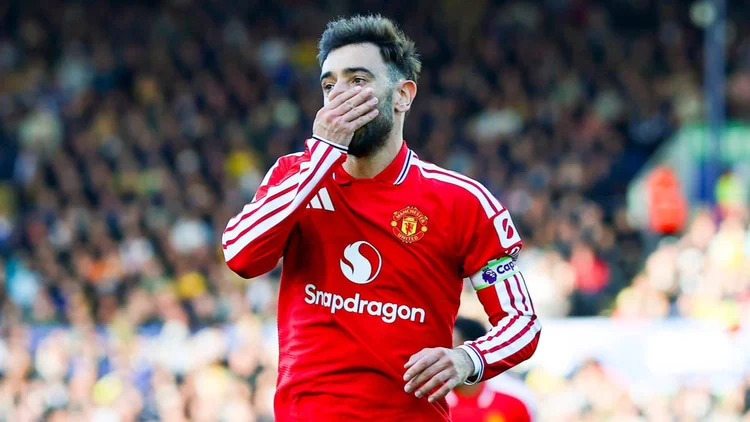
Keane’s “imposter” label captures the frustration of supporters who see effort and leadership as non-negotiable. Carragher’s attack goes further, tying Fernandes’ habits to United’s inability to press effectively. Both arguments carry weight, but the recent run also leaves room for a more immediate explanation: Fernandes is producing less, and United’s wider dysfunction makes every weakness more visible.
The next stretch will test both sides of the case. If Fernandes returns to creating and scoring while United improve their collective pressing, his critics will have less to point to. If the poor output and public friction continue, the club’s contract decision will become harder to separate from the debate about whether its captain still fits the team it wants to build.