A decision shaped by results and competing priorities
Michael Carrick’s future at Manchester United now hinges on two questions: whether results improve, and whether the club’s senior executives can agree on who should replace him. After a 4-1 Champions League defeat to Como, the club is weighing a change just months after appointing Carrick permanently in May. That timing makes the decision harder to present as a routine response to poor form: United would be reconsidering a recent appointment while still trying to define what kind of coach it wants.
The defeat has sharpened the debate, but the problem reaches beyond one match. United’s leadership must weigh Carrick’s results against the practical question of who could take over, and whether that person fits the club’s preferred approach. A change without agreement on those points could simply move the uncertainty from the manager’s position into the recruitment process.
Director of football Jason Wilcox and director of recruitment Christopher Vivell reportedly favour different candidates. Vivell wants Julian Nagelsmann, whom he assessed during his time at Chelsea and Red Bull. Wilcox, who sits higher in United’s management structure, prefers a coach with Premier League experience. The disagreement is significant because the choice of manager would also signal which executive’s judgement is carrying greater weight.
Nagelsmann’s reported appeal rests on Vivell’s earlier assessment of him. Wilcox’s preference points to a different calculation: familiarity with the Premier League could be seen as a way to reduce the adjustment a new coach faces. Neither argument settles the question of fit. A coach’s past experience can inform a decision, but it can’t guarantee that the same methods will work at a club dealing with poor results and visible tension.
The candidates bring different complications
Wilcox’s preference points toward Eddie Howe, Fabian Hurzeler, Unai Emery or Antonio Conte. Hurzeler could be difficult to recruit: he has no release clause at Brighton and is reportedly wary of joining United. Emery presents a similar challenge, while Howe and Conte are available but carry different risks. The club has yet to settle on a clear frontrunner.
Those obstacles matter because a managerial search isn’t just a list of names. A candidate’s availability, willingness to take the job and relationship with the club’s leadership can all affect whether interest becomes an appointment. The reported difficulty of recruiting Hurzeler or Emery also limits how much the club can treat them as straightforward alternatives.
Howe and Conte, meanwhile, are described as available, but availability doesn’t resolve the question of fit. United would still need to decide what it expects from its next coach and how much authority that person should have. The numbers here are underwhelming; the deeper concern is whether the club can make a coherent choice after its executives have backed different candidates.
Results and dressing-room friction raise the pressure
United have won twice in 11 games, a run that appears to be outweighing sympathy for Carrick’s circumstances. That sympathy reportedly grew after Lisandro Martinez complained last week that the club had failed to recruit properly over the summer. But performances have continued to decline, and disagreement between Carrick and senior players is adding to the strain.
Martinez’s complaint gives the slump a wider context: at least one player has publicly connected the team’s problems to the club’s recruitment. That doesn’t settle how much responsibility belongs to the manager, the squad or the executives who assembled it. It does make the choices facing United more complicated, since replacing Carrick alone wouldn’t answer concerns about the summer business.
Captain Bruno Fernandes questioned United’s approach after the Como match, saying the decision not to press was made by the coaching staff and that the team needed to be braver under pressure. He also told Italian media that the club places too much emphasis on its past. That’s a pointed criticism from the captain: it challenges both the match plan and the way United understands itself.
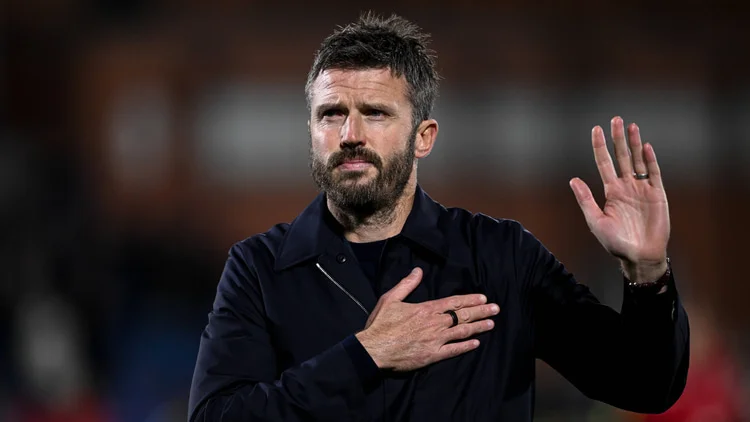
Carrick pushed back when asked about Fernandes’ remarks. “We half pressed man-to-man in the second half and ended up conceding a goal from that,” he said. “Whatever tactics you play, if you don't run back, you ain't going to win.” His response shifts the focus from the decision to press toward the effort required to recover after losing the ball. And yet, the disagreement itself remains visible: the captain has questioned the approach, while the manager has defended the demands of executing it.
"I think sometimes we have to be more brave under pressure."
Captain Bruno Fernandes gives his immediate reaction to Manchester United's heavy 4-1 defeat to Como 🗣️
🎙️ @LiamMacdevitt 📺 Stream on TNT Sports & HBO Max: https://t.co/fRCRh6tXYB https://t.co/8bzmLGkRAX
— Football on TNT Sports (@footballontnt) October 21, 2026
Bournemouth becomes an immediate test
Carrick is expected to lead United against Bournemouth on Sunday and hold his usual pre-match press conference on Friday. Potential successors have already reportedly been sounded out behind the scenes, even as the club remains reluctant to make another managerial change. That combination leaves Carrick in an awkward position: he’s preparing for the next match while the club is said to be considering who might follow him.
The immediate test is whether United can halt the slide before internal disagreements turn into a decision. A poor result against Bournemouth could end Carrick’s short, turbulent spell and leave the club searching for its fourth manager in two years. If you're working in this space, the practical question is whether a new appointment would arrive with a shared plan from the people choosing him.
What the decision could signal
This is more significant than it looks. United’s next move will reveal whether the club can align its recruitment priorities with its expectations for the team, or whether disagreement at the top will keep shaping decisions in public view. A manager needs room to work, but that room is harder to define when senior figures reportedly favour different candidates and players are questioning the coaching approach.
Here’s the thing: a win over Bournemouth could ease the immediate pressure without resolving those disagreements. A defeat could make the case for change harder to resist, while leaving the club with the same underlying questions about candidate fit, executive authority and recruitment. Carrick’s position is under threat; the larger test is whether United can make the next decision with a clear purpose.
For now, there’s no confirmed frontrunner and no reported resolution between Wilcox and Vivell. That leaves the Bournemouth match carrying two kinds of weight: the result will affect Carrick’s prospects, and the club’s conduct around the search will offer a glimpse of how settled its leadership really is. A difficult week, with no guarantee that changing the manager would settle the argument.