The FPL stakes after Bournemouth’s win
Bournemouth’s 3-0 win at Old Trafford sharpened two Fantasy Premier League storylines: Marcus Tavernier rewarded a huge wave of new owners, while Manchester United’s decision to leave Bruno Fernandes unused raised questions about his place in Michael Carrick’s plans. United have gone eight matches in all competitions without a win and still haven’t kept a Premier League clean sheet. The result gave FPL managers an immediate return from a popular transfer and a fresh reason to reassess a high-profile midfielder.
The scoreline also exposes a gap between attacking activity and attacking threat. United managed more attempts than Bournemouth, but the visitors created far better chances and converted them. For FPL, that distinction matters: shot totals can suggest promise, yet the quality of opportunities and the team’s ability to turn them into goals are what produce reliable returns.
See the Gameweek 8 report for Sunday’s goals, assists, bonus and DefCon points.

Fernandes left out as United falter
After blanking in six of his first seven FPL appearances and making forceful comments following the Como match, Fernandes was dropped from the starting XI. Carrick called it a “pure football” decision and didn’t bring the club captain on during the second half. That left managers with little immediate clarity: a benching can reflect a tactical choice, a response to form, or a wider change in a coach’s preferences, but the source offers no firm indication which explanation applies here.
“You’re picking a team, a starting XI, you’ve got options to choose from so there’s always a difficult decision. We’ve got to make what we think is the right one for the team to try and get the performance we want.” – Michael Carrick
Whether Carrick remains in charge is now part of the question; if he does, Fernandes’ route back into the lineup will be closely watched. United managed 17 attempts to Bournemouth’s 10, yet the visitors led 6-0 on big chances. That split is stark. It suggests United’s volume didn’t translate into comparable danger, while defensive errors helped turn Bournemouth’s opportunities into goals and drew louder boos from the home crowd.
For Fernandes owners, the uncertainty is practical: FPL value depends on both minutes and involvement, and a player who doesn’t enter the match can’t return points through late contributions. If you’re weighing whether to hold him, the next team selections will say more than one explanation after a defeat. This is more significant than it looks, because a change in role can matter even before it becomes a permanent absence.
Tavernier delivers for new owners
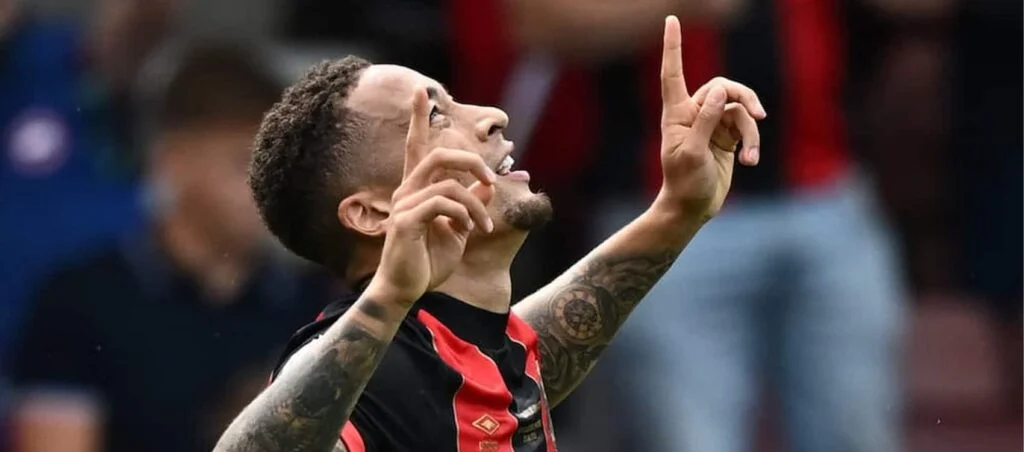
Tavernier was Gameweek 8’s most-bought player, with 655,000 managers adding him. His goal arrived in the 42nd minute, after Leny Yoro stumbled and Adrien Truffert squared the ball for a simple finish. It was Tavernier’s only shot of the match and his fifth goal of the season, giving new owners an immediate return ahead of Bournemouth’s appealing run of fixtures. The conversion was efficient rather than evidence of a stream of chances in this match, so managers should separate the result from the underlying performance.
That said, five goals by this stage make Tavernier’s appeal easier to understand. A favourable fixture run can support a transfer, but it can’t guarantee that every match will produce a return. The main question for owners is whether his scoring form and role continue to justify the attention once the initial rush of transfers has passed.
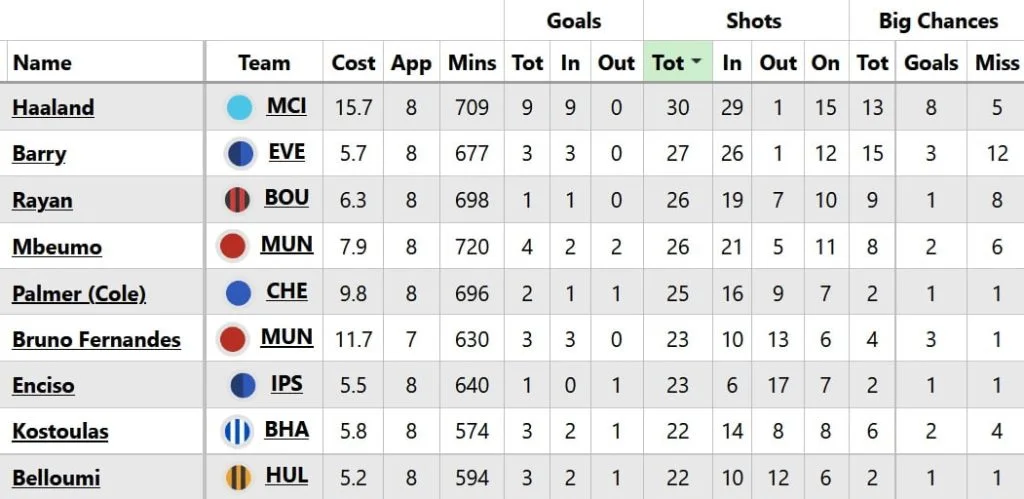
Rayan had opened the scoring by volleying in Justin Kluivert’s deep free-kick. The goal followed a four-big-chance performance and matched the warning signs in the Goals Imminent table: after Gameweek 7, Rayan had the most shots among players still without a goal. He now has nine big chances, the third-highest total, and is joint-third for attempts with 26. Those figures point to repeated involvement in dangerous situations, which gives his goal more context than a one-off strike.
Evanilson made it 3-0 after Lewis Cook’s long pass drew Senne Lammens out of his penalty area. The striker rounded the goalkeeper and finished from a tight angle; he has now scored in three consecutive matches. A run like that will attract attention, though the goal also depended on a defensive mistake and a well-timed pass. Form is useful evidence, but it’s still a small sample for judging what comes next.

United’s attackers and Bournemouth’s defensive returns
Bryan Mbeumo, bought by 341,000 managers this week, put one effort on target shortly after Rayan’s opener but finished with 0.26 expected goals. That’s a modest return for a heavily transferred player, and it underlines the difference between a shot on target and a strong scoring opportunity. Matheus Cunha showed a couple of flashes after coming on at half-time, while Harry Maguire’s yellow card left him with zero FPL points.
Bournemouth have now recorded consecutive clean sheets. Centre-backs James Hill and Antonio Silva each cleared the threshold for defensive contribution points. Hill reached it for the fifth time this season after making 21 actions; Silva has done so six times, a mark matched by only one other player. Those repeated totals give managers a clearer basis for assessing their defensive contribution than a single clean sheet does, although defensive points still depend on the relevant actions arriving in each match.
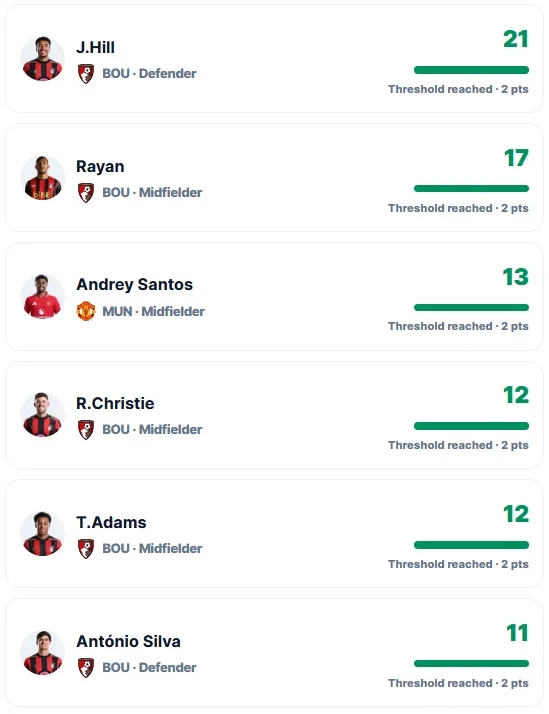
Rayan’s 17 defensive actions were a sharp departure from his usual output: his other seven appearances combined for 23. Ryan Christie, meanwhile, reached 11 actions in only 21 minutes. A single match can produce unusual totals, so those figures shouldn’t automatically be treated as a new baseline. Still, they show how defensive contribution points can add another route to a return for players whose attacking output varies.
Kroupi adds a rotation question
Eli Junior Kroupi made his first appearance of the season, adding another option to Bournemouth’s flexible front four. The 20-year-old scored 13 times in 2025/26 despite making just 21 starts, averaging a goal every 134 minutes. That record points to a productive scoring rate, but it doesn’t establish how much game time he’ll receive now that he’s back in the mix.
Kroupi isn’t registered for the Europa League group stage, which could give him more opportunities domestically. His return adds a possible rotation concern for Tavernier owners, and another potential complication around penalties. Tavernier’s goal makes clear that neither issue has slowed him so far. The open question is whether Bournemouth’s added attacking choice changes his minutes or responsibilities over the coming fixtures.
What to watch in the next Gameweek
Bournemouth’s win has given FPL managers several signals, but they don’t all carry the same weight. Tavernier’s fifth goal and Rayan’s chance volume offer reasons for interest; Kroupi’s return raises a minutes question; and the clean sheets plus defensive contribution totals strengthen the case for tracking Bournemouth’s defenders. None of those details settles future selection or scoring, and the next team sheet will matter.
United’s situation is less comfortable for managers who own Fernandes or their attackers. The team produced attempts but conceded a clear advantage in big chances, while the captain watched from the bench without being used. Here's the thing: until his role and Carrick’s plans become clearer, owners are making a decision under uncertainty. A poor result can be an isolated failure; a sustained run without wins and clean sheets makes the pattern harder to ignore.
One match, several decisions.