Five Gameweek 8 matches took place on Sunday. The scoreboards below show goals, assists, defensive contributions (DefCon) and projected bonus points, with team shot totals and expected goals (xG) also included. Taken together, the figures offer two views of the day: what happened on the pitch and how those events may translate into Fantasy Premier League points. They can help managers review decisions, but they’re snapshots of five matches rather than a complete picture of the gameweek.
The match summaries are drawn from the Match Centre. The team statistics use official Opta data from the Members Area. That distinction matters when reading the charts: the player summaries track fantasy-relevant events, while the team data describes attacking volume and chance quality. Neither view, on its own, tells you everything about a player’s likely prospects in later fixtures.
Sunday’s FPL points and projected bonus
The scoreboards bring together several routes to points. Goals and assists are familiar, direct contributions, while defensive contributions give managers another measure to consider when judging players who can influence a match without scoring. The projected bonus figures add a further layer, but they’re estimates rather than a final points return. A projection can shift as the match data is assessed, so it’s best read as an early indication.
This is more significant than it looks: fantasy managers often focus on the goal and assist columns, even though a full points review can show how different player roles are rewarded. A defender or midfielder may have a useful fantasy performance without appearing among the scorers, while an attacking return can make a player stand out even if the wider team statistics are less impressive. Context helps separate a result that came from a single decisive action from one supported by sustained attacking involvement.
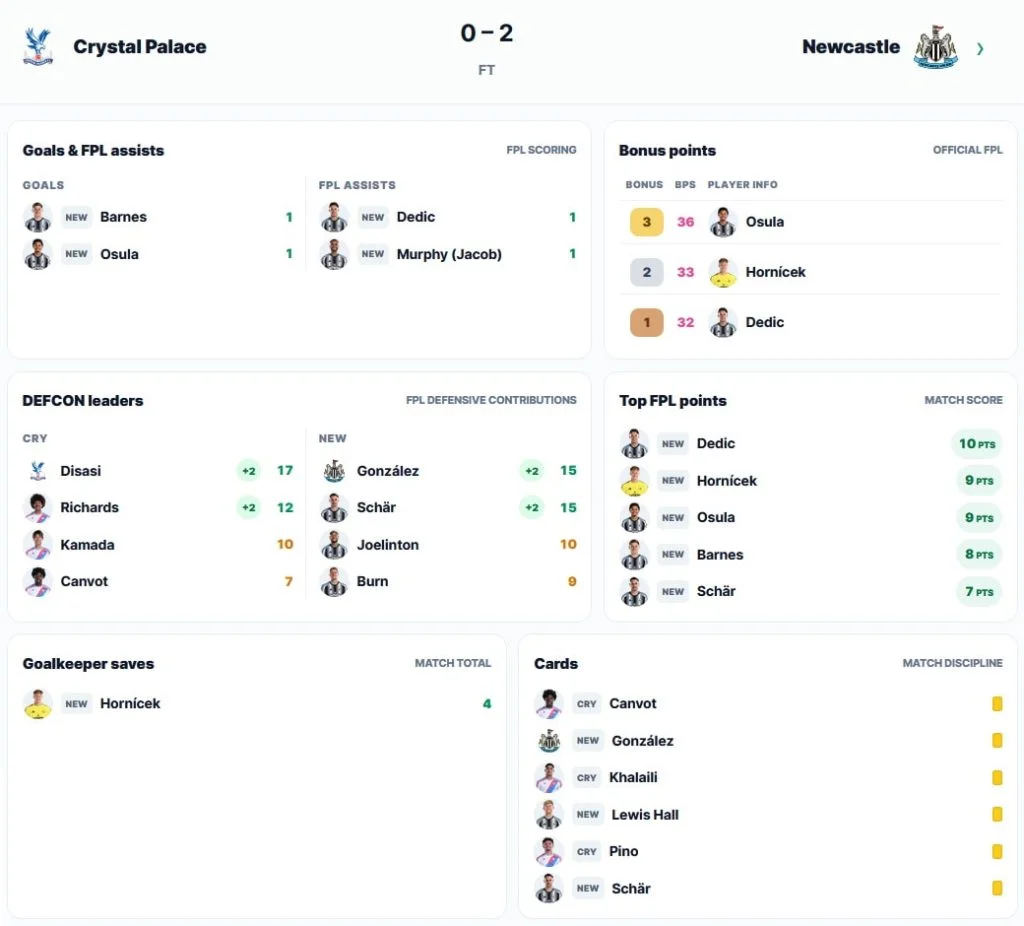
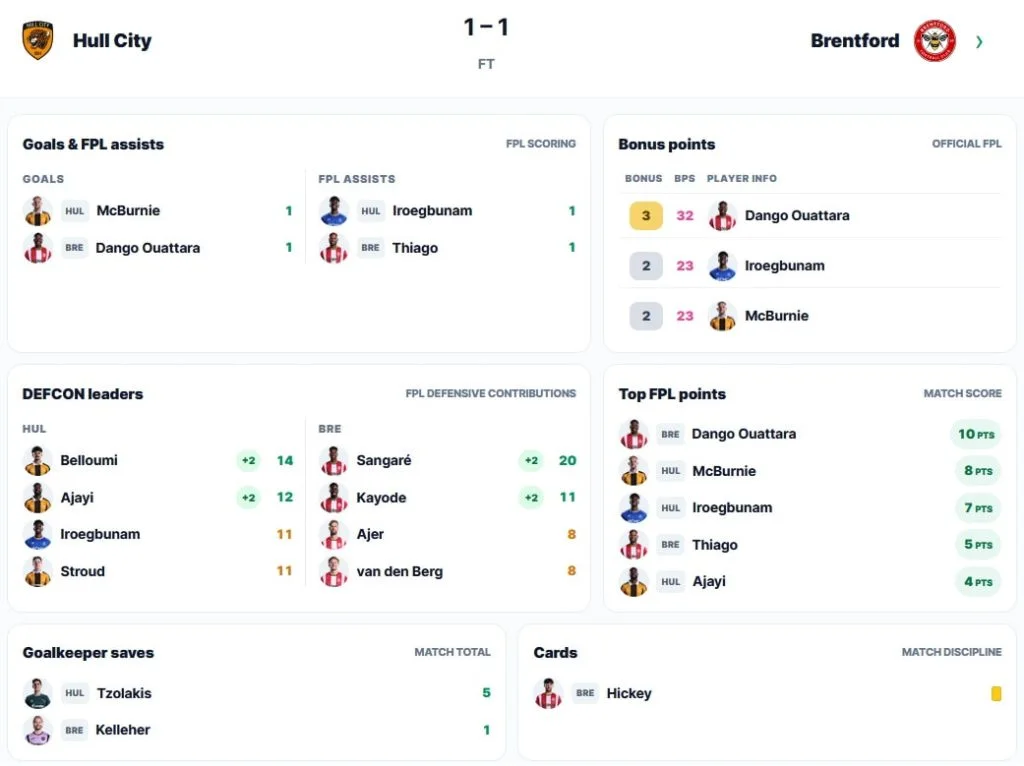
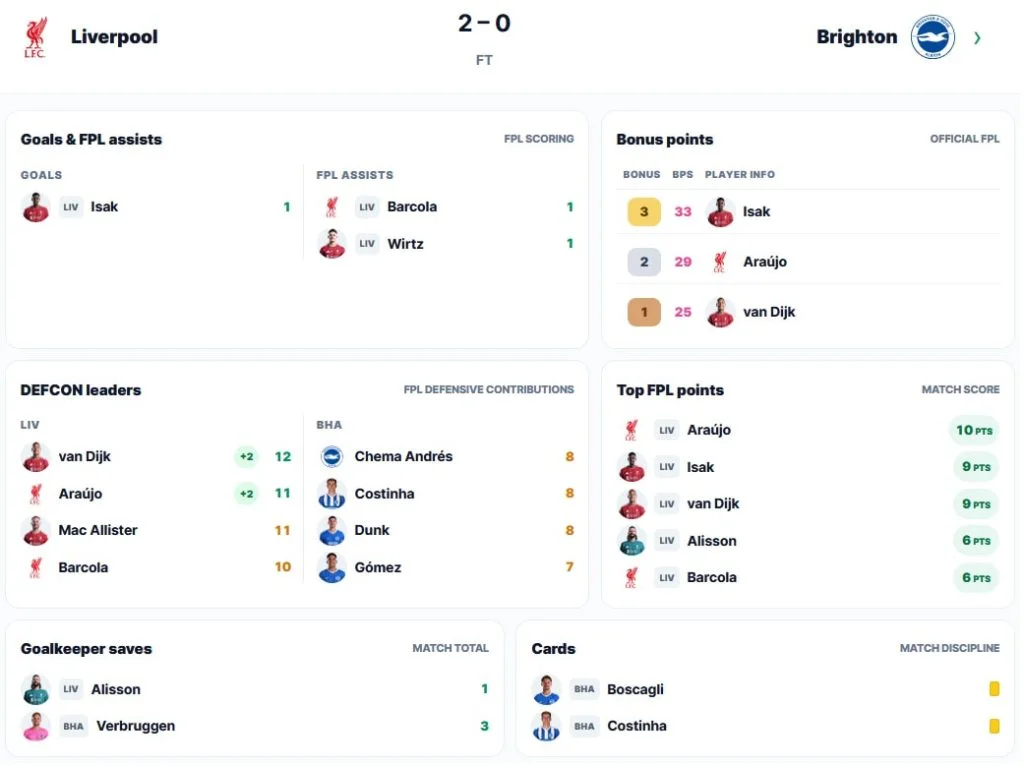
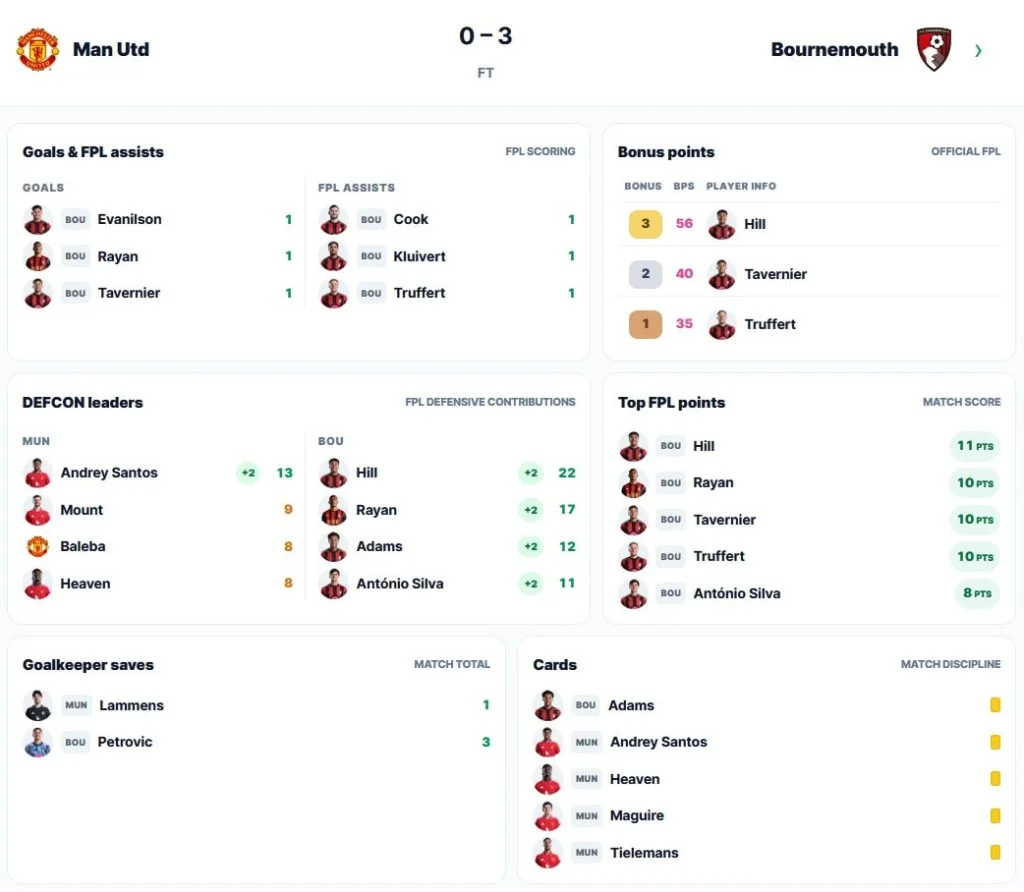
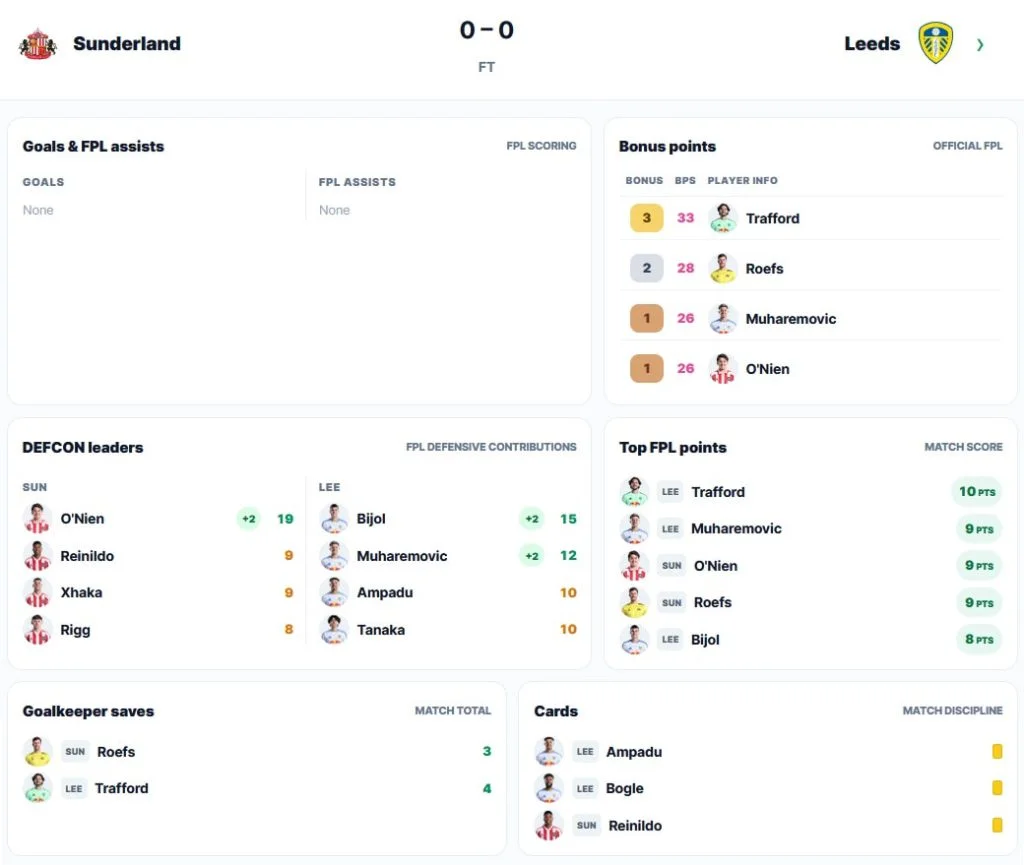
Projected bonus deserves a little restraint. Bonus systems turn several match actions into a ranking, and a player’s position in that ranking can depend on how the rest of the match unfolded. A promising projection is useful for following a live or recently completed fixture, but it shouldn’t be treated as a settled score. For managers checking their own teams, the confirmed total is the one that ultimately matters.
How to read the player figures
Goals and assists are outcomes; they don’t show every step that led to them. The wider set of figures can help explain whether a player’s points came alongside defensive work or other useful involvement, though a single match still offers limited evidence about consistency. If you’re working out whether a Sunday performance should change your view of a player, look for a pattern across several matches and consider the player’s role as well as the headline return.
That said, a points table is not a scouting report. It records events through a fantasy scoring lens, which is useful for reviewing returns but less suited to explaining every tactical detail. A player can have a quiet-looking points line and still have been involved in promising attacks; another can score well after making the most of a small number of chances. The scoreboard gives you a starting point for questions, not a complete answer.
Sunday’s team statistics
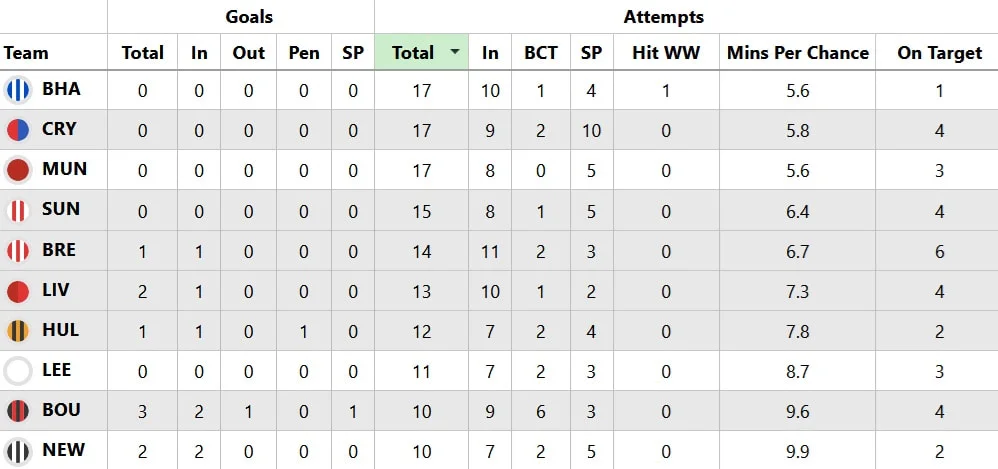
Opta charts cover total goal attempts and expected goals for the teams in action. Shot totals measure how often teams tried to score, while xG offers a way to describe the quality of the chances they created. Used together, these measures can add detail to a match summary: a high attempt count indicates volume, while the xG figure helps distinguish a stream of difficult efforts from chances with better scoring prospects.
Teams – goal attempts (total)
Teams – expected goals (xG)
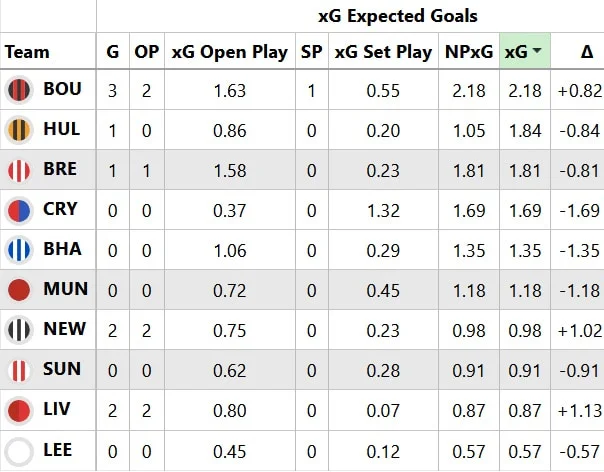
Neither statistic should be mistaken for a forecast. A shot count doesn’t account for every difference in chance quality, and xG estimates the scoring likelihood of chances rather than recording what happened next. A team can produce chances and fail to score; a low-volume attack can still convert one of its opportunities. The useful question is whether the figures support the impression left by the scoreline, not whether one metric can explain the whole match.
What the numbers can tell FPL managers
For fantasy managers, these charts are most useful as a check against snap judgments. A player’s points total tells you what was rewarded on Sunday, while the team figures can help show whether the attacking activity behind those returns was substantial. If the two tell different stories, that gap is worth examining before drawing a firm conclusion. One round of matches can prompt a closer look; it rarely settles a broader question by itself.
And this is the part most people overlook: the figures describe a particular set of matches, with a particular set of chances and outcomes. They can clarify what happened, but they can’t establish that the same pattern will repeat. A measured reading of the charts is more useful than treating a single weekend as proof of a lasting change. A signal, not a verdict.
Where to find more detail
More figures are available in the Match Centre and the Members Area Matches page. Those pages let readers consult the underlying match information alongside the summaries shown here. For anyone comparing players or teams, that extra detail can help put Sunday’s returns into context, provided the numbers are read as evidence from the matches played rather than promises about what comes next.