The defeat exposed a question of authority
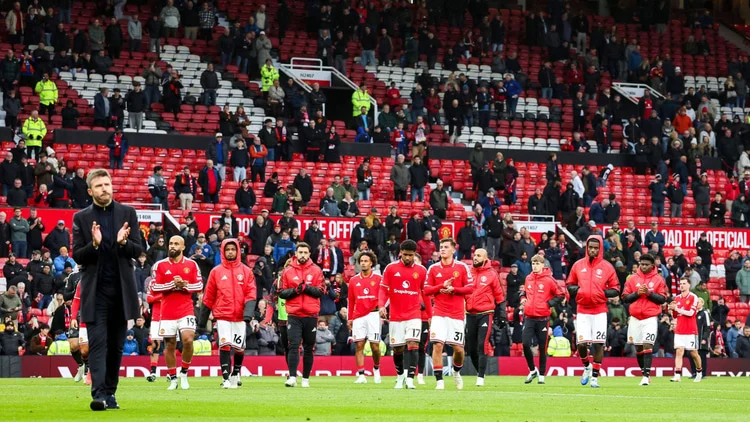
Manchester United’s 3-0 defeat to Bournemouth sharpened a question that extends beyond Michael Carrick’s likely departure: who sets the standards inside the club? Fans applauded Carrick as he left the Old Trafford pitch, then jeered the players who followed. That shift captured a widening gap between supporters’ view of the manager and their frustration with the squad. It also suggested that, for many in the ground, the result wasn’t simply a bad afternoon or a tactical failure. The anger appeared to reach beyond the touchline and toward the players expected to respond when the team falls behind.
Sky Sports pundit and former United defender Gary Neville argued that some players had undermined Carrick. “They've teased him, haven't they? They've conned him for a few months,” he said, adding that Carrick would be “disgusted with some of those players.” Neville’s language is pointed, but the underlying issue is familiar at clubs struggling to establish authority: a manager can set expectations only if the squad accepts that they apply to everyone. He also pointed to captain Bruno Fernandes’ public comments as a sign of deeper tension within the dressing room. Those claims remain Neville’s interpretation, but they put the focus on relationships and standards, not only on the scoreline.
Bruno’s comments put leadership under scrutiny
Fernandes and Lisandro Martinez had already criticized United’s non-playing staff publicly after Champions League defeats. Bruno’s remarks about Carrick came as the club was in contract talks with the midfielder, adding a sensitive dimension to an already strained relationship. Timing matters here: comments made during negotiations can be read through the lens of both football and the player’s future, even when their intended meaning is less clear. The club now has to assess what was said, how it landed with teammates and staff, and whether the dispute reflects a broader breakdown in communication.
Some observers defended Fernandes, suggesting that being interviewed in English as a non-native speaker may have shaped how his comments came across. That’s a reasonable caution: a short public exchange can flatten nuance, especially when every phrase is being judged in the context of a difficult result. Carrick’s response appeared less forgiving. With United chasing the game against Bournemouth, he left the playmaker on the bench. That decision may have been tactical, disciplinary, or some combination of the two; the available facts don’t settle the question. Either way, the choice made the tension more visible.

A captain’s public criticism of his manager can make it harder to maintain trust in a squad. Disagreement is inevitable, but Fernandes’ stature means his words carry weight in the dressing room as well as beyond it. That influence cuts both ways: a prominent player can challenge a decision in a way that draws attention to a real problem, but the same intervention can leave teammates unsure whose authority takes priority. United have seen similar public clashes involving Cristiano Ronaldo, Marcus Rashford and Alejandro Garnacho in recent years, making this latest rupture part of a recurring pattern. The numbers here are underwhelming: repeated public disputes suggest that replacing one manager alone may not resolve the conditions that produce them.
A managerial change won’t reset the culture by itself
United’s board will need to address accountability across the club, from the playing squad to sporting director Jason Wilcox and CEO Omar Barrada, both of whom have faced criticism from supporters. The challenge is to make expectations clear at every level, rather than treating each dispute as an isolated argument between a manager and a player. If staff and players can criticize one another publicly without a shared process for resolving the disagreement, each new conflict risks becoming another test of who holds authority. Replacing Carrick without changing how conflict is handled would leave the underlying problem intact. That’s more significant than it looks: a new appointment can change the voice in the dugout, but it can’t by itself establish trust or consistent standards across the club.
Fernandes is also a high-performing player, so any decision about his future would carry sporting consequences. His contribution on the pitch gives the club a strong reason to consider the value he brings, while his influence as captain raises questions about the example he sets. Those considerations don’t cancel each other out. But the club’s contract talks give United a moment to weigh his influence alongside his contribution on the pitch. For supporters, the decision will be a test of whether standards apply equally when the player involved is central to the team. The response to Carrick’s departure will show whether the board intends to set clearer expectations for players and staff.
What the next decision will signal
Here’s the thing: United can’t answer a question of culture with a press conference or a single personnel decision. It has to show, through its choices, how disagreements should be handled and what the club expects from people in positions of influence. That applies to managers and executives as well as players. If you're working in this space, the lesson is plain: authority depends on more than the title attached to a role. It depends on whether the organization backs its stated standards when doing so is uncomfortable.
The cheers for Carrick and the jeers for the squad offered a stark measure of the mood at Old Trafford. They weren’t a detailed verdict on every player or every decision, but they did show where the crowd’s frustration was concentrated after the Bournemouth defeat. And yet, a hostile reaction can identify a problem without explaining how to fix it. United’s next leadership decision will determine whether that moment marks a change in standards or another turn in the club’s cycle of instability. The answer will emerge in how the club handles the next disagreement, not only in who takes charge.