A final as the first test
Argentina’s Liga Profesional is set to bring semi-automated offside technology to its Clausura final on December 12, giving the system a first high-profile outing before a planned league-wide deployment next summer. The rollout follows an expanded technology partnership between the Argentine Football Association and Genius Sports.
That makes the final more than a one-off technology showcase. It puts a new tool into a match where decisions are likely to receive intense scrutiny, while giving the league an early opportunity to see how the system performs in its own competition. A final can expose operational pressures that are harder to judge during demonstrations: officials need to interpret the output quickly, match operations must support the equipment, and any review still has to fit within the flow of play.
There’s a practical reason to stage a system before a full rollout. Technology used in officiating has to work as part of a chain involving cameras, software, match officials and the existing video assistant referee process. A weak link can limit the value of the rest. The league’s stated plan gives it a trial period before broader deployment, though the announcement doesn’t specify how the results will be assessed or whether the schedule could change.
What the system is designed to do
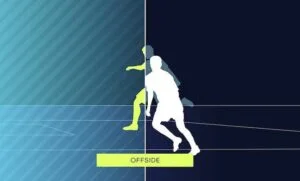
Genius Sports will fit computer-vision cameras in top-flight stadiums. Its GeniusIQ platform will track players and the ball in real time, flag possible offsides and create 3D graphics for VAR officials. The staged launch gives the league an early test ahead of broader use.
In broad terms, computer vision means software processes images to identify and follow objects—in this case, players and the ball. For an offside review, the relevant task is to help establish where players were at a particular moment in play and present that information to officials. The system’s tracking can support a decision, but it doesn’t by itself explain the full offside rule or settle every judgment involved in a match. The source describes alerts and graphics for VAR officials, not an automated ruling that replaces them.
The “semi-automated” label matters. It signals that some steps in identifying a potential offside are being handled with technology, while officials remain part of the review process. That division is central to how these systems are used: software can help locate and display relevant positions, but match officials still need to assess the incident and apply the rules. For viewers, the 3D graphic may make a decision easier to follow. It can’t guarantee that every close call will feel obvious or uncontested.
Timing is a particular challenge. Offside decisions can hinge on the moment a teammate plays the ball, as well as the positions of the players involved. A system designed to track movement in real time aims to help officials reconstruct that moment. Still, a graphic is only useful if the underlying tracking and the chosen frame give officials a reliable basis for review. That’s why the performance of the whole process matters more than the visual polish of its final output.
Why the staged rollout matters
Football has introduced video review and other officiating tools in stages because equipment and procedures have to work under match conditions, not just in controlled settings. Different stadium environments can create practical demands for camera placement, coverage and coordination. The source doesn’t detail the installation plan or identify any technical limits, so the specific challenges facing Argentina’s rollout remain unclear.
Using the Clausura final first creates a visible test, but it’s also a narrow one. A single match can show whether the system is ready to support a high-stakes review; it can’t establish by itself how consistently the technology will perform across a full league season and multiple venues. The planned expansion next summer is therefore a separate step, with a wider set of operating conditions and match situations to account for.
Here’s the thing: technology can make a decision easier to inspect without making the decision itself less contentious. Close calls are part of football, and any system that produces precise-looking graphics can invite questions about the data and assumptions behind them. (And this is the part most people overlook.) A clear image doesn’t automatically communicate how uncertainty was handled or how officials reached their conclusion.
That doesn’t make the technology unhelpful. A consistent way to track players and the ball could give VAR officials information that’s difficult to reconstruct from ordinary broadcast footage alone. But confidence will depend on how clearly the system’s role is explained and how well its outputs fit into the existing review process. The technology’s job is to inform the decision. The league and its officials will still have to make the process understandable to clubs, players and supporters.
What comes next for Argentine football
The partnership between the Argentine Football Association and Genius Sports gives the rollout an institutional framework, while the planned league-wide deployment points to a broader ambition than a final-day trial. Yet the announcement leaves open several practical questions: how quickly possible offside incidents will be flagged, how graphics will be presented during reviews, and what happens when the system’s output needs further examination. Those details will shape the experience as much as the cameras and software do.
If you’re working in this space, the useful measure won’t be whether the system can produce a compelling demonstration. It’ll be whether officials can use it consistently under match pressure, and whether its output helps audiences understand a call without creating a new layer of confusion. That’s a demanding standard, but it’s the one a league-wide deployment will have to meet.
This is more significant than it looks: the final gives Argentina an early, public test before a larger commitment across the top flight. The numbers here are underwhelming in one sense—the announcement offers no performance results, accuracy measures or detailed rollout criteria. For now, the league has set out a sequence: introduce the system in the Clausura final, learn from the outing, and plan for broader use next summer. The quality of that transition will determine whether the trial becomes a useful foundation for the league’s officiating process.
A first outing, then. The result will matter, but so will the review behind it.
The post Genius Sports to roll out SAOT into Argentina’s top tier league appeared first on Inside World Football.