Who gets to shape the future?
H3R Story Foundation starts with a question that sits beneath many debates about technology and sport: who gets included in the systems shaping the future? Its stated aim is to expand opportunities for women and girls, particularly young girls, across sport and football, media, technology, and financial and digital fluency. That breadth matters. Access to a field of play, a newsroom, a technical education, or the tools to understand money can shape who gets to participate and who gets to influence decisions.
The foundation’s focus also points to a familiar divide. New platforms and digital services can create ways to learn, communicate, and build careers, but access to those opportunities depends on more than the existence of technology. People need the confidence and knowledge to use it, and they need to see paths into the institutions and industries where it is being made. A mission spanning several fields treats participation as connected rather than as a single skills gap.
Sport as a way to understand technology
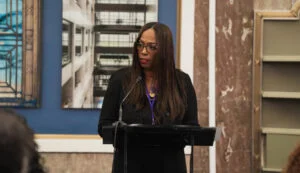
Nichelle Gainey, H3R’s founder and a board member, connects the mission to a longer history. AI, blockchain, and decentralized networks may have new names, she argues, but sport and culture have long carried an intuitive understanding of the ideas behind them. The claim invites readers to think about technology through social practices that already have meaning, rather than treating each new system as an isolated technical invention.
Football, for example, is built around shared rules, collective action, and networks of players, clubs, supporters, and institutions. Those features can offer a useful analogy for thinking about how digital systems coordinate people and information. The comparison has limits: a sport’s human relationships and traditions can’t be reduced to a software protocol. Still, cultural familiarity can make abstract concepts easier to discuss, especially for audiences who don’t encounter them through technical work.
That connection could also change who gets treated as a technology thinker. If cultural knowledge is recognized as a source of insight, people who understand sport, media, and community life can contribute to conversations often dominated by engineers and investors. That’s a broader definition of expertise, and a more useful one when technologies affect public life.
From access to influence
Expanding opportunity requires more than encouraging girls to enter new fields. It also means asking whether they can remain, develop skills, and take part in decisions. Financial and digital fluency are relevant here because they help people assess tools, understand basic concepts, and make informed choices about participation. They don’t automatically remove barriers, but they can give people a stronger footing.
Here’s the thing: inclusion isn’t measured only by who is invited into a room. It also depends on who sets the agenda, whose experience informs the design of systems, and who benefits when those systems are adopted. The foundation’s combination of sport, media, technology, and financial learning frames opportunity as both access and influence (and this is the part most people overlook).
One distinction matters. Familiarity with an idea isn’t the same as technical mastery. Recognizing parallels between football and decentralized networks can open a conversation; building or governing those networks still demands specific knowledge and careful judgment. That’s a reason to connect cultural understanding with practical learning, rather than treating one as a substitute for the other.
Why cultural memory matters
Gainey’s argument about cultural memory is more significant than it looks. Technology discussions often begin with the newest terminology, which can make the subject seem detached from established forms of cooperation and exchange. Looking for earlier patterns in sport and culture offers another starting point: it can help people question who has historically been included, whose contributions have been recorded, and what gets carried into new systems.
If you’re working in this space, the challenge is to turn that perspective into opportunities people can actually use. That takes sustained attention to learning and participation, alongside a willingness to hear from communities whose experience is often missing from technical conversations. The foundation’s stated mission sets out the ambition; the article’s central question remains the test for any future system: who gets built into it?
The post Op-ed: Football, cultural memory, and who gets built into the future appeared first on Inside World Football.