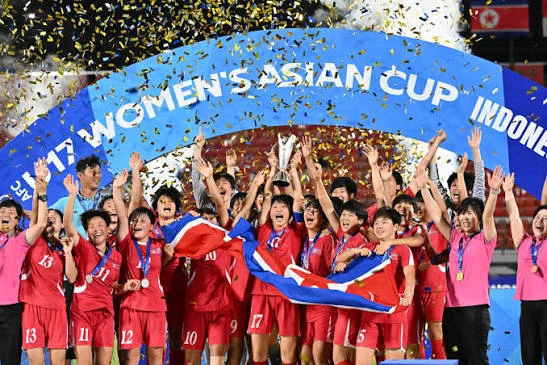
Europe’s five entrants are gone, while three teams from Asia and Africa and one from South America remain in the U17 Women’s World Cup semifinals. The final four in Morocco are defending champions North Korea, Japan, Nigeria and Brazil. That shift in the field gives the closing rounds a clear shape: three teams arrive from regions that have supplied much of the remaining strength, while Brazil carries South America’s challenge alone.
The pairings put contrasting questions on the same stage. Japan will try to turn a strong defensive record into a way past the defending champions, while Nigeria can draw on a group-stage win over North Korea. Brazil, after recovering from an early setback against China, faces a Nigeria side that’s had to work through a demanding run of opponents.
North Korea face a familiar challenge
North Korea’s 3-0 quarter-final win over the United States underlined why they’re chasing a third straight title. Ri Ui-gyong scored twice as her team fired 33 shots at goal; US goalkeeper Avellina Saunders made nine saves. Those figures suggest sustained pressure, even with Saunders repeatedly keeping the score down.
The champions have won the tournament four times and have gone unbeaten in knockout matches since 2010, excluding extra time and penalty shootouts. That record gives them a formidable history in the rounds where one mistake can end a campaign. But it doesn’t erase the evidence from this tournament: Nigeria, though, have already shown they can unsettle them, winning their group-stage meeting 3-1.
That was North Korea’s first defeat in normal time at the competition in almost eight years. Japan now get their chance to stop the title run. Here’s the thing: the semifinal isn’t simply a test of whether North Korea can dominate possession or create chances; it’s also a test of whether Japan can make the champions work for every opening. This is more significant than it looks.
Japan bring the strongest defensive record
The 2014 champions have reached their first semifinal since 2016 with a steady run: three group-stage wins without conceding, a 3-1 victory over Kenya and a 1-0 win against Ghana. Across five matches, Japan have scored 13 goals and conceded one, with three clean sheets. That balance matters because it shows they haven’t needed to rely on narrow, low-scoring games to stay difficult to beat.
Japan’s record points to a side that can protect a lead as well as build one. Against North Korea, the challenge will be maintaining that shape when pressure arrives, while still finding ways to threaten at the other end. Similar teams often face a trade-off in knockout football: defend too deep and they invite sustained attacks; push forward too early and they can leave space behind.
If you’re working in this space, the useful question is whether Japan’s defensive consistency holds when the opponent’s attacking volume rises. The one goal conceded across five matches is a strong marker, but it doesn’t answer how the team will respond to North Korea’s shot-making and tournament experience. And yet, Japan’s clean sheets give them a credible platform.
Nigeria’s route and Brazil’s comeback
Nigeria’s path to the last four has been demanding. After losing their opening match, they beat Puerto Rico, North Korea, Mexico and Venezuela, edging the latter 1-0 in the quarter-finals. The recovery is a meaningful part of their story: a poor start didn’t dictate the rest of the tournament, and the win over North Korea gives them direct evidence that the champions can be beaten.
The quarter-final against Venezuela was a different kind of test. A one-goal margin leaves little room for error, and it suggests Nigeria had to manage a close finish rather than simply pull away. That could matter against Brazil, where the semifinal’s outcome may turn on how well each side handles pressure after a setback.
Brazil, meanwhile, came from behind to beat China 2-1. A comeback win can reveal resolve, but it also means the team had to recover from conceding first; that’s a lesson the staff can use, though it doesn’t guarantee the same response in the next match. The semifinal pairing sets Brazil against Nigeria, while Japan meet North Korea. Two distinct contests, and little margin for a slow start.
What the semifinals will test
This is the second edition under FIFA’s expanded 24-team annual format. Morocco is scheduled to host five editions, from 2025 through 2029. A larger field gives more teams a route into the tournament, while an annual schedule creates a regular stage for youth sides to compete and develop. The results here also show how quickly a tournament can narrow: five European entrants have already been eliminated, and the final four represent three continents.
The format’s longer-term value will depend on what teams can build from repeated participation and strong matches. Youth tournaments can offer players important international experience, but a semifinal berth alone doesn’t tell us how those opportunities will translate into senior football. That’s the part most people overlook.
With Japan’s defensive discipline and Nigeria’s win over the defending champions already shaping the draw, the semifinals will test whether North Korea can keep control of the age group. Japan need to show that their defensive record travels against the tournament’s most decorated side, while Brazil and Nigeria must turn their contrasting routes into a composed performance. One question remains: can the champions respond to a defeat that already broke their long run in normal time?
Contact the writer of this story, Harry Ewing, at [email protected]