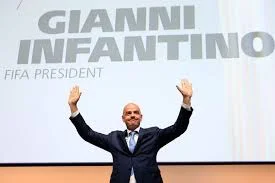
FIFA’s interpretation of its presidential term limit is the central question facing Gianni Infantino’s planned 2027 campaign. The dispute turns on a narrow point with broad consequences: whether his first, three-year spell as president counts toward the three-term maximum in FIFA’s statutes. Former FIFA governance chair Miguel Maduro argues that it does, and says the body responsible for deciding the issue should be FIFA’s Review Committee.
Dispute over what counts as a term
Article 33, paragraph 2 of FIFA’s statutes says no person may serve as president for more than three terms. Maduro, a Portuguese lawyer, says Infantino has already been elected three times and that the text makes no distinction between complete and partial terms, or between terms of different lengths. On that reading, the length of a term doesn’t change whether it counts: the question is whether a person was elected to serve it.
That interpretation puts the meaning of the word “term” at the heart of the dispute. FIFA’s position, announced in 2022, treats Infantino’s first three-year period differently from the subsequent terms. Maduro’s reading treats the same period as part of the count, regardless of its duration. The disagreement isn’t just about arithmetic; it concerns whether the statute’s limit applies to the number of times a president is elected or to a particular span of time in office.
FIFA said in 2022 that its Council had decided not to count Infantino’s first three-year term, clearing the way for him to stand again in 2027. Infantino has confirmed he intends to seek another term at next year’s FIFA Congress in Rabat, Morocco. His campaign has drawn calls for him to step down over his World Cup investor plans, adding pressure to an already contentious bid. The planned campaign therefore faces two questions: whether the rules permit him to run, and whether the body interpreting those rules can command confidence from those who disagree with its conclusion.
Speaking at a news conference organized by NGO FairSquare, Maduro called the term-limit language “very clear” and said there was “no way to reconcile another term for Gianni Infantino with this rule.” He backs FairSquare’s Reboot campaign, which challenges Infantino’s eligibility. That connection is relevant when weighing his role in the debate, but it doesn’t resolve the textual question at its center. The case will depend on how the statutes are read and who has authority to apply them.
Who should decide
Maduro says the FIFA Council lacks authority to rule on a candidate’s eligibility. In his view, that decision belongs to the Review Committee, with a possible appeal to the Court of Arbitration for Sport (CAS). The distinction matters because deciding who may stand is not the same as setting broad policy: it applies an existing rule to a particular candidate and circumstance.
“The first issue is this is not a matter for the FIFA Council to decide,” he said, comparing the Council’s role to a state president interpreting a constitution to extend their own time in office instead of leaving the question to a court. His analogy frames the problem as one of institutional checks: the people who benefit from an interpretation shouldn’t be the only ones determining whether it’s valid. The comparison is Maduro’s argument, not a ruling on how FIFA’s procedures should operate.
He argues that any reading of the rules that expands a president’s time in power should require “very strong arguments,” given that the term limit is intended to prevent the concentration of power. That standard puts the purpose of the limit alongside its wording. If the rule exists to constrain how long one person can hold office, an interpretation that excludes a period in office needs to explain why the statute supports that exception.
Here’s the thing: procedure can shape the credibility of the outcome. Even a decision grounded in a plausible reading of the rules may attract suspicion if the process appears to favor one side. A review by the committee Maduro identifies, followed by the possibility of an appeal to CAS, would put the eligibility question through the channels he says the rules provide. Whether that process settles the dispute will depend on the reasoning and the standing of the body that delivers it.
Pressure within football governance
Maduro was appointed chair of FIFA’s governance committee in 2016. Infantino dismissed him less than a year later after Maduro refused to approve the appointment of Russia’s deputy prime minister, Vitaly Mutko, to the FIFA Council. That history gives Maduro direct experience of the organization’s internal politics, while also making him a participant with a clear record in the wider dispute.
Maduro believes potential challengers have been deterred by what he calls a “climate of fear.” He says people who dissent or express independent views can be ostracized, pushed aside and lose influence within FIFA. Those are his claims about the organization’s culture; they’re difficult to separate from the broader question of how open a leadership contest can be when potential candidates believe dissent carries a cost.
In any governing body, rules on eligibility are only one part of a leadership contest. Potential challengers also need to believe they can take part without losing influence for speaking independently. If you’re working in this space, that’s the practical issue behind Maduro’s warning: a formal right to run may mean less if people see the organization as hostile to challengers. And yet, claims of pressure need to be considered on their evidence, not treated as a substitute for deciding the statute’s meaning.
Maduro also points to term-limit changes elsewhere in football: European associations amended UEFA’s statutes two years ago in a way that would allow president Aleksander Ceferin to stand again, while the Asian Football Confederation and its president, Sheikh Salman bin Ibrahim Al Khalifa, abolished term limits. These examples don’t determine what FIFA’s statutes mean, but they show that term limits can be changed by governing bodies as well as interpreted. The distinction matters: an explicit change to a rule is different from a decision about whether a particular period counts under the existing text.
What the dispute could mean
Maduro warns that without reform, Infantino’s eventual successor could reproduce the same concentration of power. The eligibility dispute will test whether FIFA’s term-limit rules can constrain its leadership in practice. This is more significant than it looks: a limit written into the statutes has little force if its application depends on interpretations that can be made by the people it is meant to constrain.
That doesn’t mean the outcome is already clear. The dispute described here presents competing readings of the rule and a disagreement about who should decide; it doesn’t supply a final ruling from the Review Committee or CAS. The next test is whether FIFA’s process produces an explanation that addresses both the language and purpose of the limit. If it doesn’t, the controversy may outlast the campaign itself.
Term limits are meant to set a boundary. The test is whether that boundary holds when a sitting president wants another term.
Contact the writer of this story at [email protected]. Readers can use the address to contact the writer about this report. The article’s central issue remains the interpretation and application of FIFA’s term-limit rules.