In Fantasy Premier League, holding a player is still a decision. Each Gameweek you keep an underperforming asset, you’re choosing him over the alternatives available to your squad. That can be the right call—but it deserves the same scrutiny as a transfer. My current test case is Dominic Calvert-Lewin (£6.1m), and my attachment to Leeds United makes it harder to assess him cleanly.
Calvert-Lewin isn’t an obviously poor pick. He has reasons to stay in a team: regular minutes, attacking opportunities and fixtures that could bring returns. The harder question is whether those reasons remain stronger than the case for other moves. It’s easy to mistake patience for sound judgment when the player you’re waiting on has already become part of your story.
When fandom enters the transfer market
My Leeds affection has roots beyond FPL. On 3 December 2025, my birthday, Emil and I watched Leeds beat Chelsea 3-1 at Elland Road. It was our first Premier League match together, and a memory like that can make neutral analysis of the club feel like a stretch. FPL, though, doesn’t award points for a good day at the stadium.
My early team selections showed how easily support can spill into squad building. I bought Ilia Gruev (£5.0m) because he was Bulgarian and played in the Premier League. Later, Ao Tanaka (£4.9m) also made his way into my team for reasons shaped more by Leeds loyalty than by the prospect of attacking returns. For a while, my squad looked closer to a supporters’ group than a points-chasing team.
There’s nothing wrong with following a club closely. The trouble starts when the feeling changes the standard you apply to its players. A Leeds asset can receive more time, more generous interpretations of the numbers and a longer list of excuses than a player from another club would get. Calvert-Lewin brings that bias into focus.
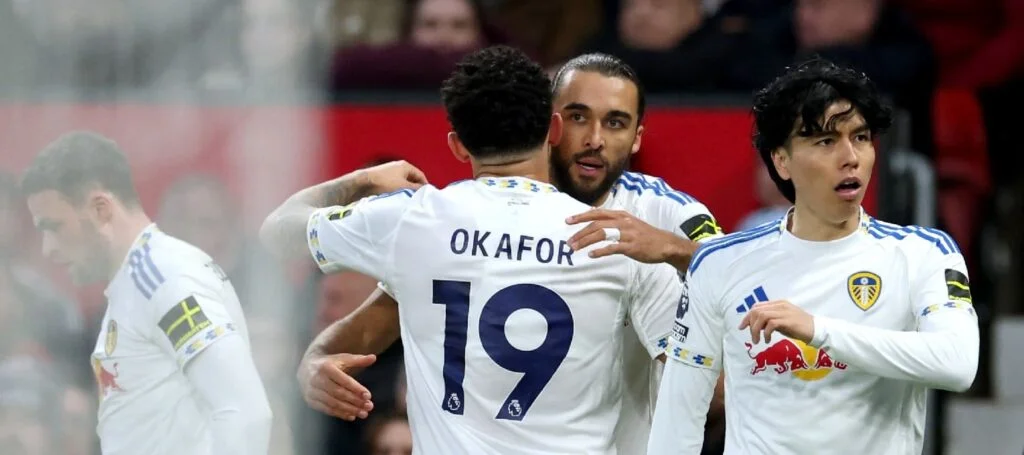
Compare the choices in front of you
My co-host on Her Fantasy League, Emil, wants me to swap Calvert-Lewin for Alexander Isak (£9.2m). His case is direct: Isak offers greater attacking potential. I’m not sold yet. Calvert-Lewin’s fixtures deserve consideration, and I could instead spend my free transfer on the defence. I also have to admit that I may not want Emil to be right.
The useful question isn’t whether Isak will outscore Calvert-Lewin next weekend. One may score, both may blank, or the result could go the other way. The decision is whether Isak looks sufficiently better over the next five or six Gameweeks to justify the transfer and the budget he requires.
That comparison should include the whole squad. My defence has a problem of its own: replacing Semi Ajayi (£4.2m) with Jan Paul van Hecke (£5.0m) is a plausible use of the free transfer. So the choice isn’t simply one striker against another. It’s Calvert-Lewin alongside a strengthened defence, or Isak alongside the defence I already have.
A transfer that looks sensible on its own can still be wrong for a particular team. Managers need to weigh the best available move against the other needs competing for that transfer. Otherwise, it’s possible to spend a free transfer solving a problem that matters less than the one left untouched.
Ask whether you would buy him today
One question helps strip away some of the attachment: if I didn’t already own this player, would I buy him now? Applied to Calvert-Lewin, it means comparing him with Isak, Nicolas Jackson (£7.0m), Thierno Barry (£5.6m) and other forwards on current prospects—not on what I hoped when I first brought him in.
This gets at the sunk cost fallacy: sticking with a decision because of what you’ve already put into it, even though that past investment can’t be recovered. In FPL, the cost may be several disappointing Gameweeks, time spent assembling a statistical case or the desire to see an earlier judgment vindicated. For me, a memorable afternoon at Elland Road adds another emotional reason to wait.
None of those things improves a player’s prospects. The points already missed are gone. What matters now is the likely value of keeping him compared with the alternatives. Underlying figures such as expected goals, shots in the box and big chances can help—but they can also become a filter for evidence that supports the conclusion we prefer. The numbers don’t make the decision objective if we select only the ones that suit us.
That’s why a hold should be reconsidered every Gameweek. It may still be right to keep the player, but the manager should be able to explain why using his current role, minutes, opportunities and fixtures. “I’ve waited this long” doesn’t answer the question.
Judge the process, not just the points
Sometimes the player we defend finally scores, perhaps even returning double digits. That outcome feels like proof that patience worked. It might be. But a strong Gameweek can’t tell us by itself whether holding him was the best decision during the weeks before it.
If another option delivered more points while we waited, the hold may have carried a cost. Likewise, selling just before a goal doesn’t automatically make the transfer a mistake. FPL gives managers the result, not a score for the quality of their reasoning. Football won’t explain whether good judgment or good fortune produced the points.
Imagine two managers keeping the same striker through a run of blanks. One is persuaded by his minutes, underlying numbers and fixtures. The other is afraid to accept that the original transfer hasn’t worked. If the striker scores twice, both managers get the same points. Only one has a reason for the decision that could be repeated with another player.

Recognise when the case has changed
There’s no universal number of blanks that should trigger a sale. Three poor Gameweeks may not matter if the player’s minutes, chances and fixtures remain encouraging; five may still leave a case for holding. The warning signs are more personal: defending a player more vigorously than you assess him, treating better fixtures as perpetually just ahead, or dismissing alternatives because selling would make the original pick feel wasted.
Another warning sign is that the reasons for keeping a player have changed from the reasons you bought him. Roles and minutes shift. Team performance changes. A view formed weeks ago may no longer fit what’s happening now. Changing your mind in response to new information isn’t necessarily panic; refusing to reassess can be its own kind of mistake.
Calvert-Lewin is still in my team as I write this. Emil still prefers Isak, and I’m weighing the forward swap against the defensive move. I can call that a strategic choice, but I know a Calvert-Lewin goal this weekend would make me feel unusually pleased with my patience. If Isak scores twice, I’ll hear about it from Emil.
Neither result, by itself, will settle whether the decision was sound. The better test is whether I made it using the information available at the time, then stayed willing to change course when that information changed. I’ll always have a soft spot for Leeds, and I can keep that memory without giving their players extra credit in my FPL team.
Patience earns its place when current evidence supports it. Once the evidence stops making the case, holding on may be more about defending yesterday’s decision than backing tomorrow’s returns. If you didn’t already own your most frustrating player, would you buy him today?