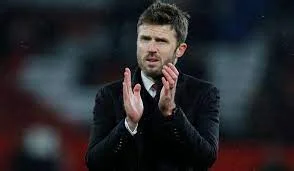
Pressure builds as results collapse
Manchester United’s slide from Champions League qualifiers to the Premier League’s bottom three has put Michael Carrick’s position in immediate doubt. Club executives are expected to urge co-owner Sir Jim Ratcliffe to dismiss the manager, less than five months after handing him a permanent contract through 2028. The speed of that reversal says as much about the club’s expectations as it does about Carrick’s results: an appointment made after a strong interim spell is now being judged against a short run of poor league form.
United have collected eight points from 10 league matches, winning once, and have gone eight games without a victory. Across all competitions, Carrick’s team have won only three of 15 matches. Those records leave little room for the argument that the league position is an isolated blip. The club had not confirmed a departure as of Tuesday morning, but the gap between Carrick’s public expectation of continuing and the reported stance of senior executives has become the immediate story.
A revival that didn’t last
Carrick took charge on an interim basis in January after Ruben Amorim left. His first 16 matches brought 11 wins and helped secure Champions League qualification, a run strong enough to persuade the club to make the appointment permanent. That early success gave Carrick a clear case: he’d steadied the team and produced results quickly. The sharp reversal since then has turned that momentum into a difficult test of United’s football leadership, because the same executives who backed him must now decide whether the appointment was sound or whether the evidence has changed.
A 4-1 Champions League defeat at Como and a 3-0 loss to Bournemouth brought Carrick close to dismissal last month. United’s football executives then gave him three matches to change the season’s direction. The response was mixed: a 2-0 defeat at Chelsea, a 3-2 comeback win over Roma in Europe, and a 4-4 draw with Aston Villa on Sunday. One win in that sequence offered a reminder of the team’s capacity to recover, but it didn’t settle the wider problem. A brief response can buy time; it can’t by itself establish that a team’s direction has changed.
United never led against Villa and were 4-2 behind in stoppage time before Joshua Zirkzee and Patrick Dorgu scored late to salvage a point. The late goals made the scoreline look more respectable, yet the result still left United in the relegation zone. That distinction matters. A dramatic finish can lift a side and its supporters, but the league table records the points, not the emotional swing of the final minutes.
After the draw, Carrick said he expected to carry on working. “We understand the situation; we haven’t won enough games. But I expect to move forward and keep working on things we’ve been working on.” He added: “I’m quite clear with what direction the club needs to go in. We’ve just got to win games.” His remarks acknowledge the central weakness in the case for his survival: there’s no substitute for results. They also leave open what “direction” means in practical terms, and whether the club’s decision-makers believe Carrick can turn that direction into wins soon enough.
Executives face a decision of their own
Chief executive Omar Berrada and director of football Jason Wilcox are expected to meet Ratcliffe in Monaco and recommend a change. Both were central to Carrick’s appointment, making a reversal a test of the football structure that Ratcliffe and INEOS have been rebuilding for two years. Dismissing a manager so soon after giving him a long contract would raise questions about how the club assesses a promising spell, sets expectations and responds when results turn. That’s a problem for the executives as well as for the coach. A decision could come before United travel to Liverpool on November 22, following the international break.
Mauricio Pochettino is the leading reported contender. The former Tottenham, Chelsea and Paris Saint-Germain manager currently leads the United States and signed a new deal through 2030 in August. Reports suggest a break clause could let him leave for about £7 million, but no approach has been confirmed. His reported availability is therefore only one part of the picture: United would still need to decide whether his experience and timing fit the job, and the source provides no indication that those discussions have advanced.
Eddie Howe, who left Newcastle United in the summer, is also understood to be under consideration. Antonio Conte has been mentioned as another possibility, though he’s seen as an unlikely choice. Conte can deliver quick results, but his tenures at Tottenham and Napoli have also featured clashes with club ownership. At Tottenham in 2023, he said: “They can change the manager but the situation cannot change.” That history points to a familiar hiring question for United: whether a coach’s short-term record can be separated from the working relationship required to sustain a project. Results matter immediately, but a manager’s fit with the club’s leadership matters after the first run of matches, too.
What the next appointment would signal
This is more significant than it looks. If United change managers now, the move will show how much weight the club places on Carrick’s early run compared with the losses that followed—and whether a permanent contract offers meaningful time when results deteriorate. For anyone working in football leadership, that’s the harder question behind the coaching decision: a club can replace a manager quickly, but it can’t avoid scrutiny of the process that selected him.
Here’s the thing: whoever takes over would inherit the same immediate task Carrick has described—winning games. A new name could reset attention, but it wouldn’t automatically resolve the team’s position or explain the sharp decline from the interim spell. (And this is the part most people overlook.) The appointment would also serve as a public measure of how Berrada, Wilcox and Ratcliffe intend to make football decisions. A point against Villa. Not a rescue.
Carrick remains in charge for now. With United still searching for a way out of the bottom three, the Liverpool match at Anfield on November 22 could arrive with a new manager in the dugout. Until the club confirms its choice, the timing remains uncertain; the pressure, plainly, isn’t.