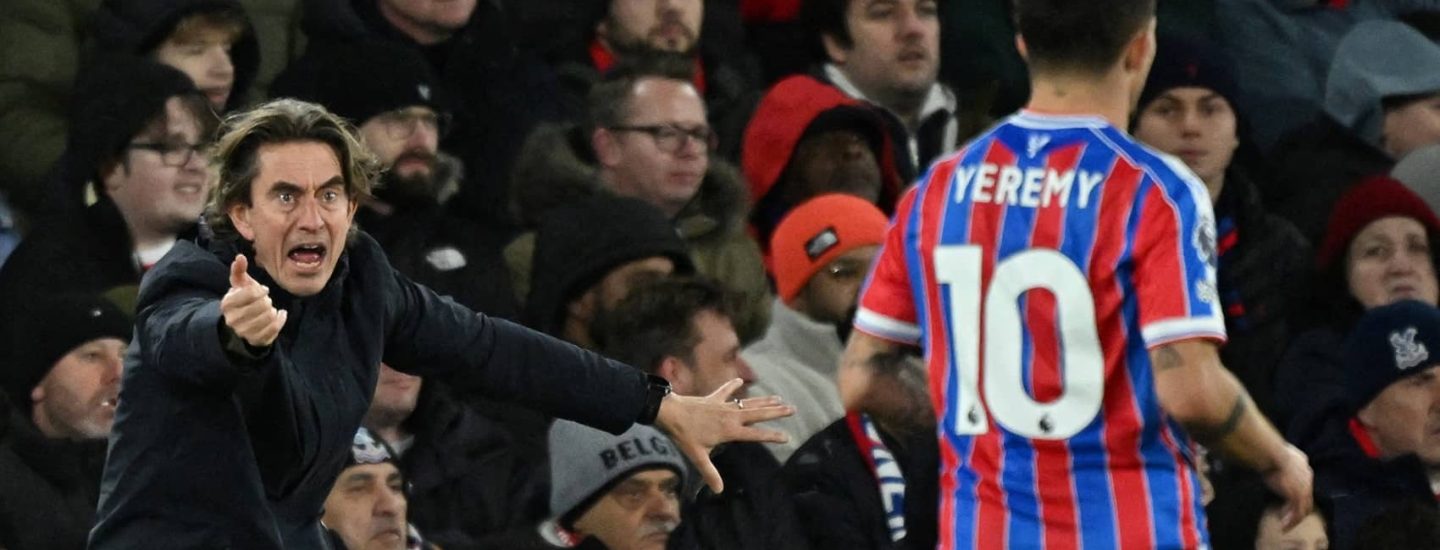
Thomas Frank’s appointment at Crystal Palace matters because the club’s immediate problem is plain: the defence is failing, and the team is running out of room for error. Frank takes over after Pierre Sage’s five-month spell as head coach, bringing a long Premier League record at Brentford and a shorter, less successful run at Tottenham Hotspur.
Palace are 20th, conceding heavily while balancing league and European fixtures. For Fantasy Premier League managers, the question is whether Frank can steady the side quickly enough to bring players such as Jean-Philippe Mateta (£6.3m) and Ismaila Sarr (£6.2m) back into consideration.
Palace’s defensive problem comes first
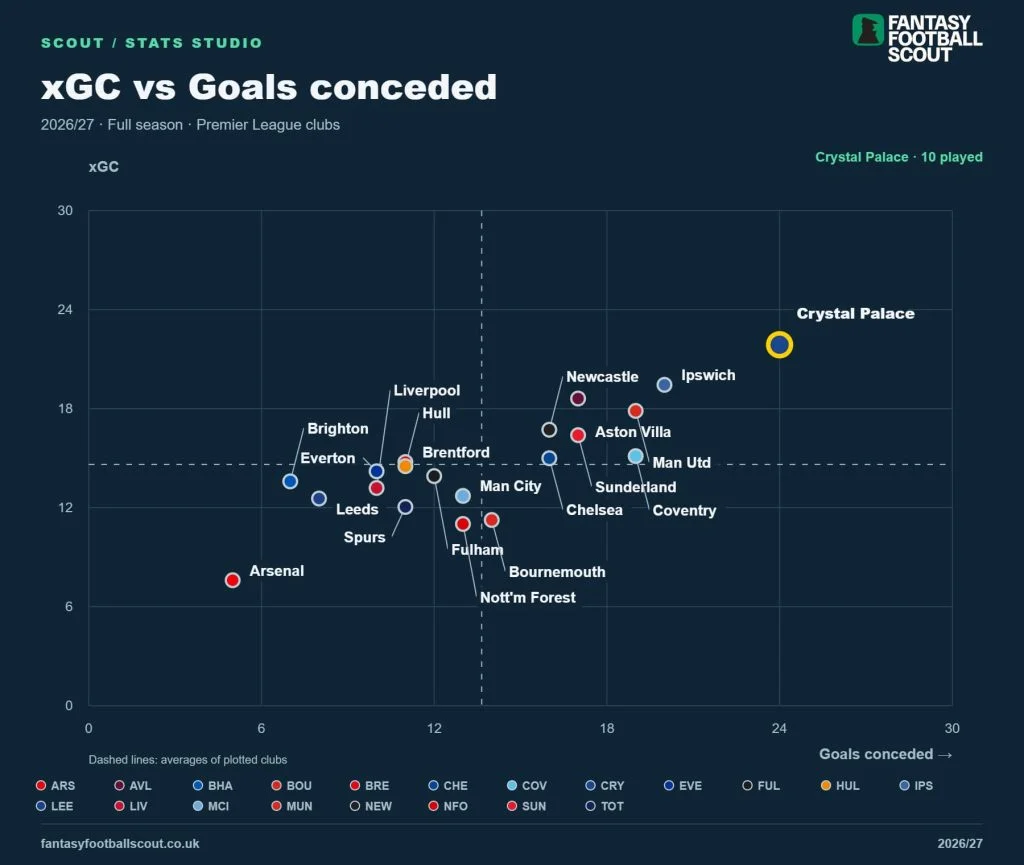
The scale of the defensive decline is stark. Palace rank last for goals conceded (24), expected goals conceded (21.87), shots faced (189), big chances allowed (36), shots on target faced (60), shots inside the box faced (136) and set-piece attempts faced (68). They have kept one clean sheet in 2026/27.
Only Aston Villa have made more Opta-defined defensive errors: Villa have 18, Palace 16, and four of the Eagles’ errors have led directly to goals. Palace have also lost 93 challenges, more than any other club.
Frank’s first public message focused on the basics. He said Palace must stabilise, defend with better principles and attitude, improve at set pieces in both boxes, and stop conceding during defensive transitions. He also wants the side to control matches and score, but identified those three defensive priorities as the first problems to solve.
That diagnosis is hard to dispute. The harder question is how quickly a new coach can repair a back line that is struggling across nearly every major defensive measure.
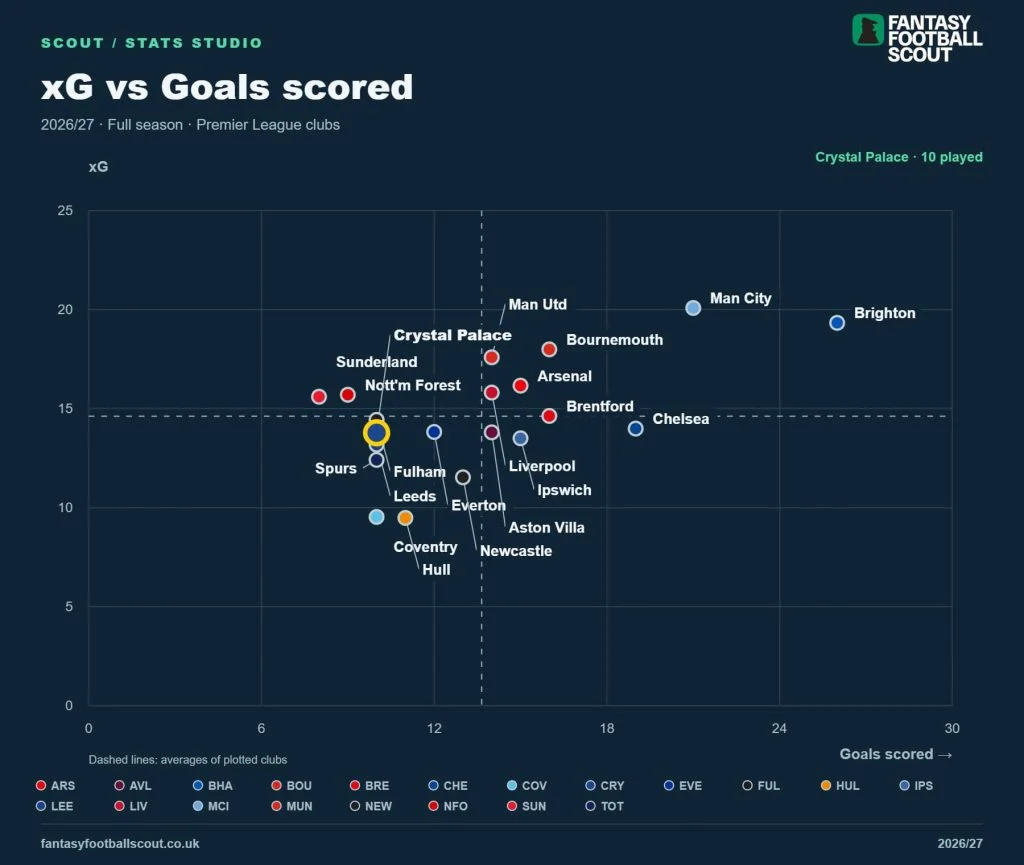
The attack has more to build on. Palace scored nine times in the first six Gameweeks, then went three matches without a goal before a stoppage-time penalty in Gameweek 10 ended the drought. Their expected goals tally of 12.99 ranks 14th, while their 29 big chances rank fifth. Shot volume is a league-second-worst 109, but that number alone may understate the quality of the opportunities they create.
Mateta and Sarr returning to the picture should give Frank more options. He also believes the squad needs confidence, belief and energy restored. For FPL managers, the attacking upside is real, but it depends on Palace first becoming a more reliable team.
What Frank’s previous teams suggest
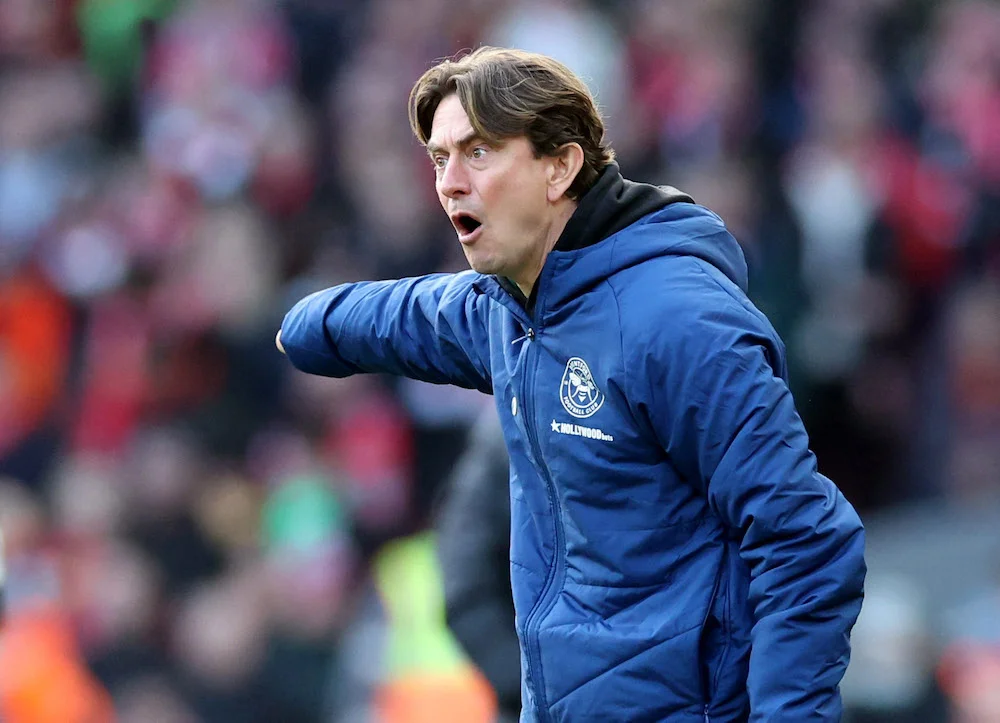
Frank worked with Denmark’s youth teams and Brøndby before joining Brentford in 2016 as an assistant to Dean Smith. He replaced Smith as head coach in October 2018 and led the club to promotion from the Championship in 2020/21. Brentford then finished 13th, ninth, 16th and 10th in Frank’s four Premier League seasons.
The league positions moved around; the underlying numbers barely did. Brentford ranked eighth for expected goals in all four campaigns, and eighth or ninth for expected goals conceded in three of them. Their expected-goals-against ranking slipped to 14th in 2024/25, even though the figure itself improved slightly on the prior season. Brentford’s data-led operation may help explain that consistency.
| Season | Goals scored (rank) | xG (rank) | Goals conceded (rank) | xGC (rank) |
|---|---|---|---|---|
| 2021/22 | 48 (11th) | 49.02 (8th) | 56 (12th) | 49.98 (9th) |
| 2022/23 | 58 (7th=) | 57.39 (8th) | 46 (5th=) | 50.62 (8th) |
| 2023/24 | 56 (11th) | 59.84 (8th) | 65 (13th=) | 56.70 (8th) |
| 2024/25 | 66 (5th=) | 60.21 (8th) | 57 (13th) | 56.24 (14th) |
Tottenham offered a less reassuring picture. Frank took charge before 2025/26, but by Gameweek 26 Spurs had scored 36 goals (10th=) from an xG of 27.45 (17th), while conceding 37 (11th=) against an xGC of 37.72 (12th). Injuries and Son Heung-min’s departure, after his influence had begun to fade, complicated the season. Even in the previous campaign, when Ange Postecoglou’s Tottenham finished 17th, they ranked ninth for xG. The decline in attacking output under Frank drew criticism, and he was dismissed in February 2026.
| Season | Goals scored (rank) | xG (rank) | Goals conceded (rank) | xGC (rank) |
|---|---|---|---|---|
| 2025/26 (to GW26) | 36 (10th=) | 27.45 (17th) | 37 (11th=) | 37.72 (12th) |
A pragmatic reset may suit Palace
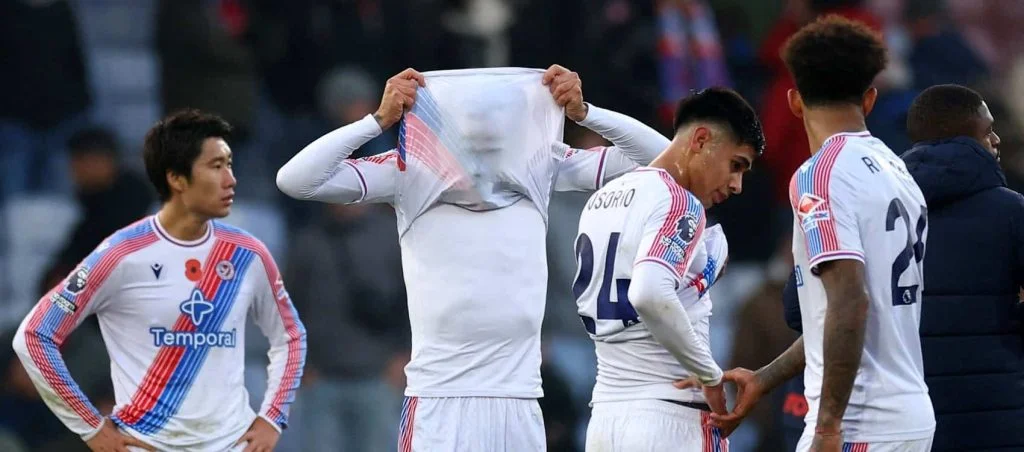
Frank’s Tottenham averaged just over 50% possession, ranking 10th. Under Roberto De Zerbi, Spurs have lifted that figure to 63.3% in 2026/27, second in the league. The contrast helps explain why Frank’s approach struggled to win over Tottenham supporters.
Palace may read the same football differently. Sage’s system was described as chaotic: wing-backs pushed high, centre-backs spread wide, midfield cover was thin, and the defenders looked poorly suited to building from the back. A simpler structure could help limit the mistakes Palace are making under pressure.
At Brentford, Frank’s teams usually had around 45% possession and ranked in the bottom half for the metric. They were comfortable playing long: Brentford ranked second for long balls in 2024/25. A compact defensive block, less risky circulation and more direct service to Mateta or Jorgen Strand Larsen (£5.9m) as a hold-up forward are plausible changes. That might steady Palace; it won’t automatically make them exciting.
Set pieces could offer a route to points

Palace rank 20th for expected goals conceded from set plays and 11th for set-piece xG at the attacking end. Frank’s Brentford sides, by contrast, consistently created danger from dead balls:
| Season | Set-piece xG (rank) | Set-piece xGC (rank) |
|---|---|---|
| 2021/22 | 15.1 (3rd) | 11.3 (11th) |
| 2022/23 | 18.4 (2nd) | 10.9 (7th) |
| 2023/24 | 15.7 (2nd) | 8.6 (3rd) |
| 2024/25 | 16.8 (3rd) | 9.6 (5th) |
Even during his Tottenham spell, Frank’s side ranked joint-third for set-piece goals, with 13. He has already called dead-ball work in both boxes a priority, so Palace’s training ground is likely to spend plenty of time on it.
Chris Richards (£4.9m) and Jefferson Lerma (£4.8m), despite Lerma’s limited role, have been Palace’s main set-piece targets in each of the past three seasons, excluding the departed Maxence Lacroix (£5.8m). Yeremy Pino (£5.5m) and Adam Wharton (£5.3m) have taken many of the free kicks and corners in 2026/27; the club’s current set-piece takers give FPL managers a useful starting point for tracking any changes.
Fewer shots, better chances?
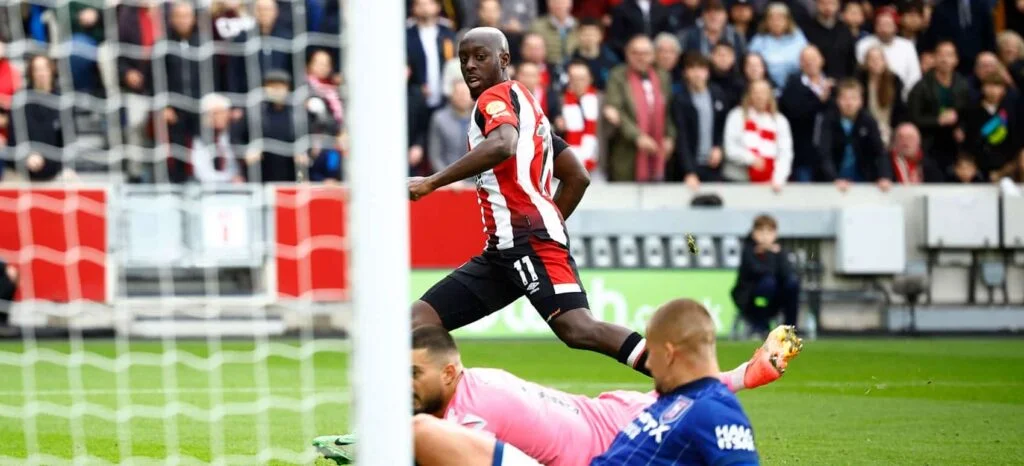
Frank’s Brentford sides consistently took relatively few shots, finishing in the bottom half for attempts in all four Premier League seasons. Yet they ranked in the top half for big chances every time. That gap is the point: Palace may not need to shoot more often if Frank can help them create better opportunities.

Brentford’s 2024/25 chance profile tells you a lot about Thomas Frank’s attacking priorities: 48 of the team’s 66 goals came from big chances, while only three came from outside the box. That looks like a deliberate bias toward getting into good positions rather than taking hopeful shots.
“It’s not that you can’t finish outside the box. If you are balanced and things are opening up then you are more than welcome to shoot. But if you are off balance with three players in front of you and try to shoot, it’s probably not the best decision, and I’m pretty big on that.” – Thomas Frank, speaking in 2023, quoted by the Athletic
That could matter for Crystal Palace’s forwards. Whether Jean-Philippe Mateta or Jørgen Strand Larsen leads the attack, a Frank side may create better-quality chances for the central striker. Brentford’s wide players benefited too: Kevin Schade (£6.1m) and Bryan Mbeumo (£7.9m) combined for 39 big chances in 2024/25, with only five coming from penalties.

The 2024/25 xG charts use larger circles to show higher-quality chances.
Frank’s defensive trade-off: volume for distance
Frank’s teams can concede plenty of attempts while still limiting opponents’ best looks. Brentford faced 647 shots in 2024/25, the second-highest total in the league and more than Leicester City and Ipswich Town, both relegated that season. Yet they gave up only 80 big chances, seventh-fewest in the division.

For FPL managers, that split may mean save points for goalkeepers and fewer high-value chances conceded by defenders. The numbers describe a clear pattern, though they don’t tell us how quickly Palace can reproduce it.
Players who could earn DefCon points

Christian Nørgaard (£4.8m) would have cleared the DefCon threshold in more than half his appearances in each of Frank’s four Brentford seasons. Ethan Pinnock (£4.5m), meanwhile, reached the required contribution tally in at least 44% of his starts in 2021/22, 2022/23 and 2023/24.
Palace have possible candidates in midfield: Jefferson Lerma, Adam Wharton and Will Hughes (£4.3m). At centre-back, the early numbers under Sage were already promising. Marc Guéhi and Axel Disasi (£4.4m) averaged well over 10 defensive contributions per 90 minutes.

FPL defenders ranked by defensive contributions per 90 minutes in 2026/27, with a minimum of five appearances.
Systems, team news and selection clues


Frank’s Brentford moved between a 3-5-2 and a 4-3-3. The back three was the near-default when the club first reached the Premier League in 2021; later, Frank tended to use it against tougher opposition, including the traditional ‘big six’. The 4-3-3 eventually shifted toward a 4-2-3-1, a shape also familiar from his time at Spurs.

Managers who rely on press conferences for injury clues will find Frank relatively forthcoming. He usually identified new concerns and returning players, and often gave time estimates for medium-term injuries. Examples include his updates on fresh concerns and returnees and his timelines for players with longer absences.
His uncertainty around borderline cases was less useful. Phrases such as “could be a tight one”, “quite possible” and “touch and go” often preceded a player missing out. That makes those vague updates a useful warning sign, even if they aren’t definitive. Frank is candid on the broad picture, but close calls can still leave FPL managers guessing.
Fixtures and workload

Palace’s next two fixtures are against newly promoted sides, though neither has looked easy to beat. After that, Gameweeks 13–15 look tougher for the defence, with three opponents among the league’s top 10 scorers. The attacking matchups may be more inviting: those same three sides rank among the eight most generous defences.
Frank’s old reputation as a giant killer had faded by his final Brentford season. The Bees won only one of their 12 league matches against top-six teams in that campaign.
Palace also have European and domestic cup commitments to manage. Frank has already said where the league stands if priorities collide:
“We need to balance a lot of things with aiming high in Europe. There are two fantastic cup tournaments, but, of course, [the] Premier League is most important, if we need to prioritise.” – Thomas Frank, in his first interview with Crystal Palace’s in-house media
That points toward more rotation in Europe than Palace used under Sage, who appeared reluctant to rotate. The schedule still creates a selection risk, but Frank’s stated hierarchy gives FPL managers a useful clue about where he may protect his strongest lineup.

What FPL managers should wait for
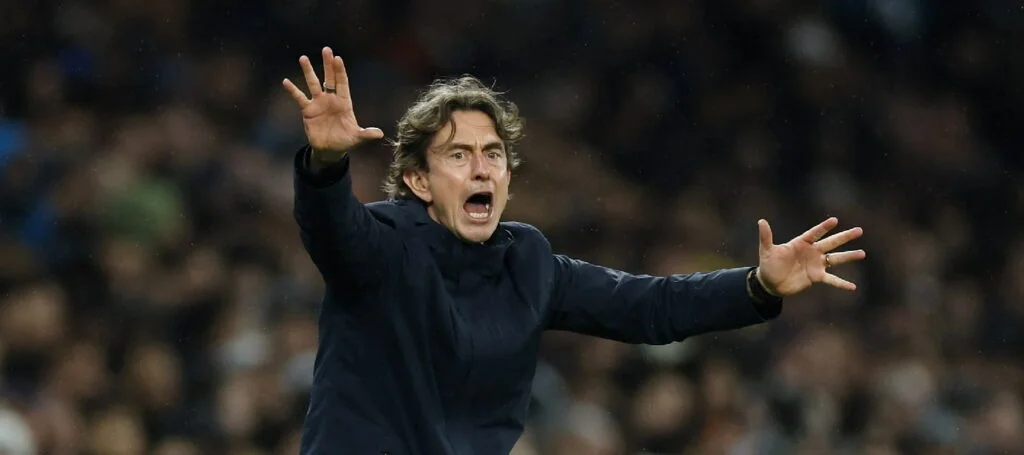
The opening two fixtures may tempt a punt, but Palace’s new manager needs time to settle on a formation and starting XI. One match can offer clues; it won’t establish a dependable performance trend. By the time the picture becomes clearer, the fixture list is less attractive.

Frank is taking over mid-season, with little time to work with the full squad: several players are away on international duty, as the November call-ups show. His early record also needs context. At Spurs, he avoided defeat in normal time in 10 of his first 11 matches, but he had a full pre-season. When he joined Brentford mid-season, he won only one of his first 10 games.
Gameweek 23 looks like a more sensible point to reassess Palace assets, provided the performances have improved enough to justify attention. Until then, the promising tactical history is a reason to watch, not a reason to buy early.

There are reasons to think Frank and Palace could suit each other better than Frank and Spurs did. His set-piece work and defensive structure may put Marc Guéhi and Disasi on the FPL radar, while his Brentford teams produced plenty of attacking value. In 2024/25, Yoane Wissa, Schade and Mbeumo recorded 68 attacking returns combined; Ivan Toney scored 20 league goals in 2022/23. Ismaïla Sarr and Mateta could also benefit if Palace’s attack starts creating more.
But the bigger question hangs over the whole appointment: how much of Brentford’s success came from Frank, and how much from a club that was exceptionally well run? Palace will provide a different test of his methods. If the performances improve, FPL managers will have names to revisit; until then, the fit remains a promising theory rather than proven value.